Crochet Curly Grass Pattern for a Three-Branch Bouquet Filler
· admin
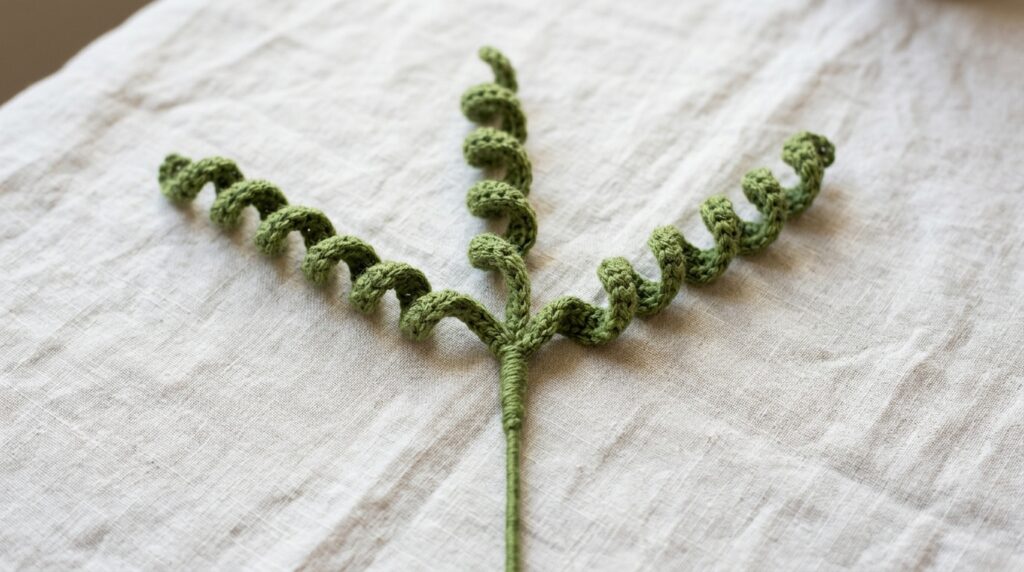
This crochet curly grass pattern makes a three-branch green filler for a handmade bouquet. Each narrow branch begins as a chain and receives two sc in every available chain, causing the strip to curl naturally. The branches meet at one base and a green wire supports the finished piece. It adds a different outline beside open flowers without requiring separate petal pieces.
Materials
- Cotton No. 8 in soft green.
- A 1.90 mm crochet hook.
- Green 0.8 mm wire for the support.
- Scissors, a yarn needle and wire cutters.
The source gives no numerical gauge or finished branch length. A chain count is supplied for the basic version, and the source explicitly allows changing that count for longer or shorter grass. Use one thread type for all three branches if you want their curls to behave similarly.
Stitches and Pattern Notes
US crochet terms are used throughout. Ch = chain, sl st = slip stitch, sc = single crochet, hdc = half double crochet, dc = double crochet, tr = treble crochet. An increase places two stitches in one stitch; a decrease combines stitches. The source legend uses the words “2 stitches together” for an increase into one stitch. Those increases are written here as 2 sc or 2 dc in the same stitch. A cluster, when specified, is closed together. Crab stitch is reverse single crochet. This is a narrow return along a chain, not a circular increase round. The original uses “2 sc together” to mean two sc in the same chain. Making sc2tog decreases would shorten the strip and remove the intended curling effect.
Crochet the Three Curling Branches
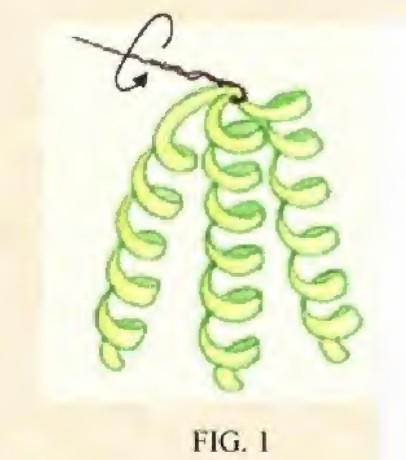
- Ch 31. Starting in the second chain from the hook, work 2 sc in each of the thirty remaining chains. The return has sixty sc.
- At the common base, ch 31 again and return with 2 sc in each available chain, creating the second branch.
- Repeat that chain-and-return construction once more for the third branch. Fasten off and hide the loose end neatly at the shared base.
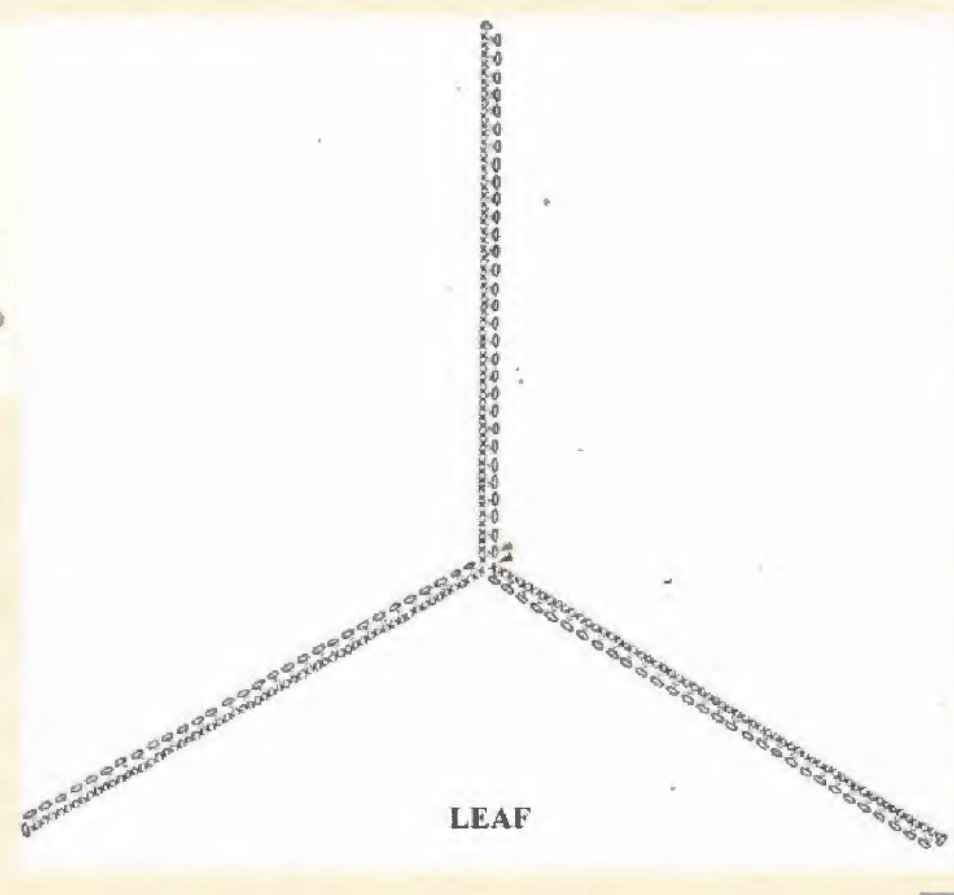
The book says to repeat the construction three times, and its chart shows three branches in total. This article follows that three-arm diagram rather than adding three extra branches after the first. Work each return all the way back to the shared base before chaining the next arm.
Let the Increases Form the Curl
Two sc in every chain create more stitches along the return edge than along the foundation. That difference makes the strip coil. Keep the foundation chains even and avoid stretching them flat after the return is complete. Guide a loose spiral with your fingers if necessary, then let it settle into its natural shape.
If a branch remains unusually straight, check its return stitches before changing the hook. There should be two sc in each of the thirty foundation positions. Working one sc per chain, or mistaking the increase for a decrease, gives a different result. The pattern does not require wire to be crocheted along the full curl.
Add the Support Wire
Insert the green 0.8 mm wire through the joined base and bend it as shown in the original drawing. The bend catches the base so the three branches can hang or spread from one supported point. Hide the yarn tails and arrange the branches to keep each coil visible. The source lists green wire rather than a separate full-length crochet stem casing.
Adjust the Length
For a longer or shorter branch, change the initial chain count while keeping the same return rule. A foundation of N chains provides N minus 1 return positions when beginning in the second chain, and two sc are worked in each. Change one sample first and compare its curl with the basic version before making a full set.
Questions About Curly Grass
Is this a trailing leaf vine?
No. It is a compact three-arm filler built from curled chain strips. The earlier leaf garland and hanging plant have separate leaf shapes along a longer vine.
Can I use it beside any flower?
It can be arranged beside a compatible wired flower stem. Keep its common base below the blooms so the curls remain visible rather than covering the flower centers.
More Crochet Flowers and Plants
For another botanical project, try rolled crochet flowers or a continuous crochet leaf garland.
Pattern and Photo Credits
Adapted from Crochet Flower Patterns Book, supplied file with BEBRIGHT.IN on the cover. The reference photographs and diagrams show the original source project. This written adaptation has been checked against the supplied pages; it has not been physically crocheted or maker-tested for this article.
Leave a Reply