Crochet Bouquet Pattern Part 2: Daisies and Gathered Carnations
· admin
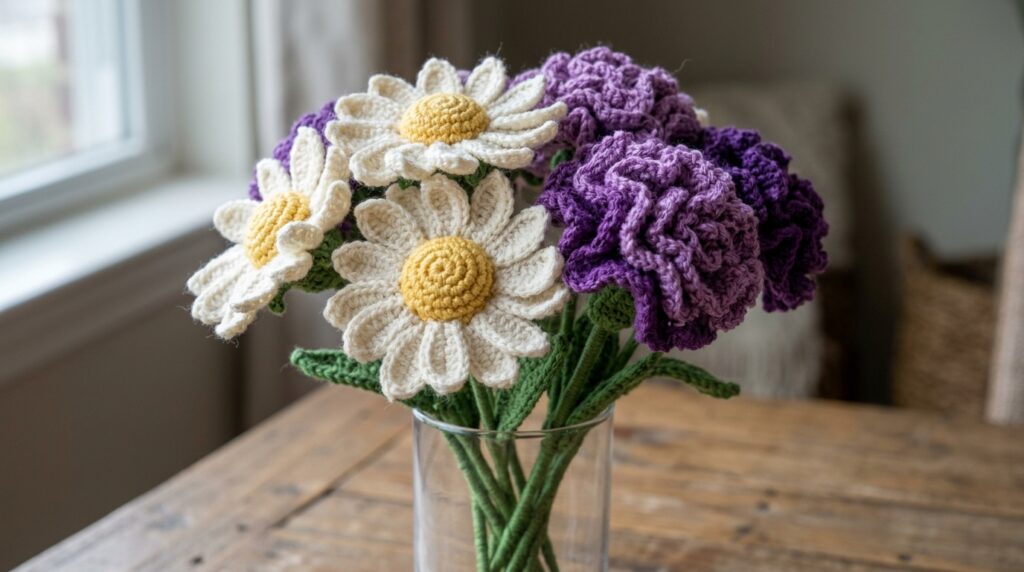
This crochet daisy and carnation bouquet pattern completes the five-flower bouquet with two gathered, ruffled shapes. The daisy has a separate raised yellow center and a white sepal, while the carnation is pulled together with a matching yarn gathering thread. Both use the same wrapped stems and pointed leaves as the roses, layered flowers and buds in Part 1.
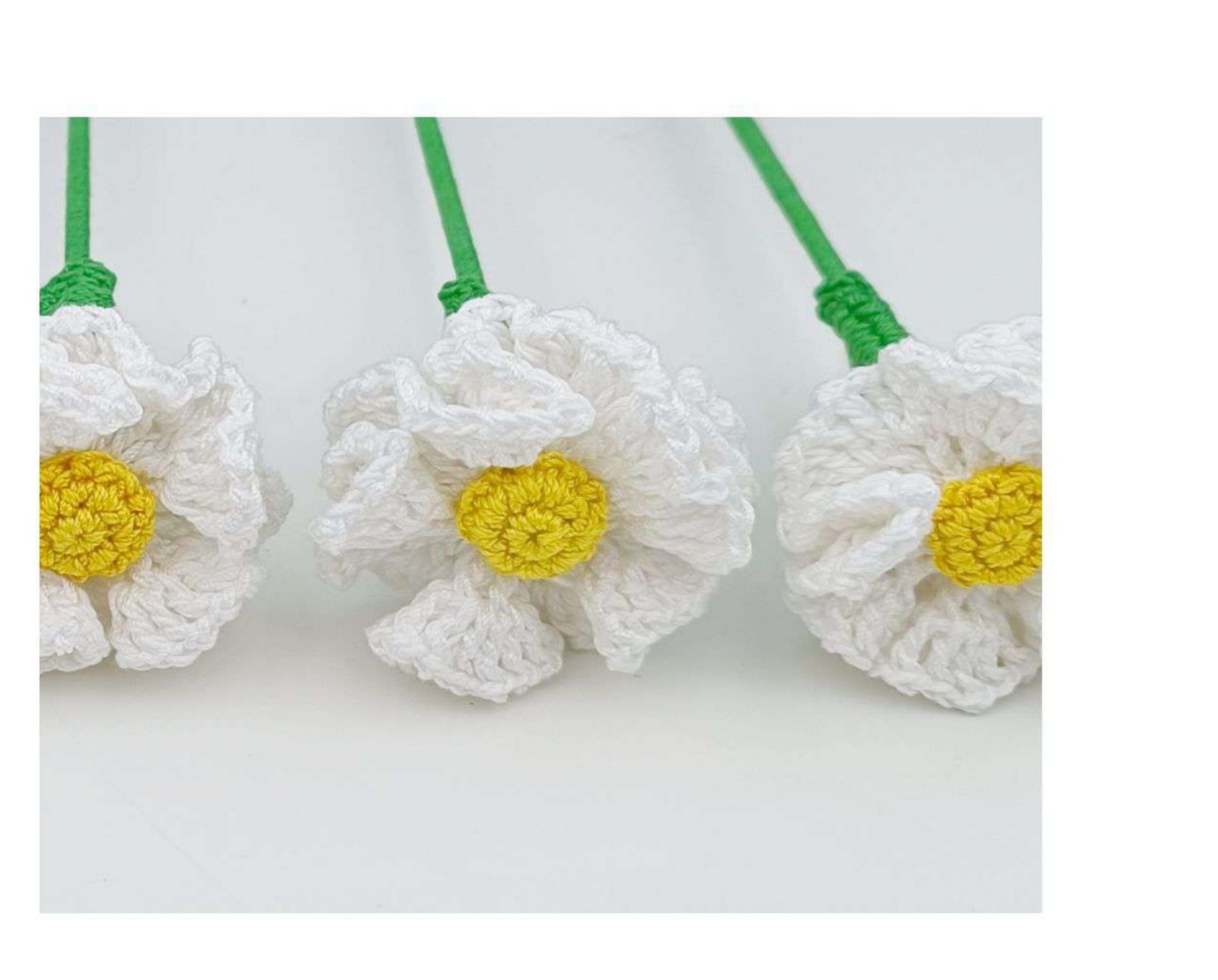
Crochet Daisy and Carnation Bouquet Pattern Materials
- Cotton yarn such as YarnArt Begonia, 169 m / 50 g, with a 2 mm hook. The source uses green for the stems and leaves; pink for roses and buds, white and yellow for daisies, two blues for the layered flowers, and purple for carnations.
- Floral wire approximately 1.1 mm thick, cut to about 25 cm / 10 inches for the source stems. The source allows 0.8-0.9 mm wire for lighter flowers.
- Scissors, yarn needle, measuring tape, wire cutters or pliers and suitable craft glue.
The source flower heads measure approximately 4.5-6 cm across, depending on the type, with 25 cm stems. These measurements refer to the original cotton and hook. Different yarn thickness changes the flower size; there is no fixed numerical gauge.
Stitches and Pattern Notes
US terms are used here. Ch = chain, sl st = slip stitch, sc = single crochet, hdc = half double crochet, dc = double crochet, tr = treble crochet, MR = magic ring, inc = 2 stitches in one stitch, and dec = a decrease across two stitches. BLO means back loop only and FLO front loop only. The source calls the working rounds rows even when the disc is joined in a circle. A ch-3 start replaces a dc. The carnation text says ch 20 but also instructs tightening a magic ring and joining the first sc; the matching daisy construction shows that 20 sc into the ring is intended, rather than a separate twenty-chain ring.
Shared Stem, Leaf and Sepal Preparation
Wrap each 25 cm floral wire with green yarn, securing the ends with a small amount of craft glue. Keep the upper end slim enough to fit the opening of the crochet disc. Work one pointed leaf per stem, or the number you want for your arrangement.
Shared leaf
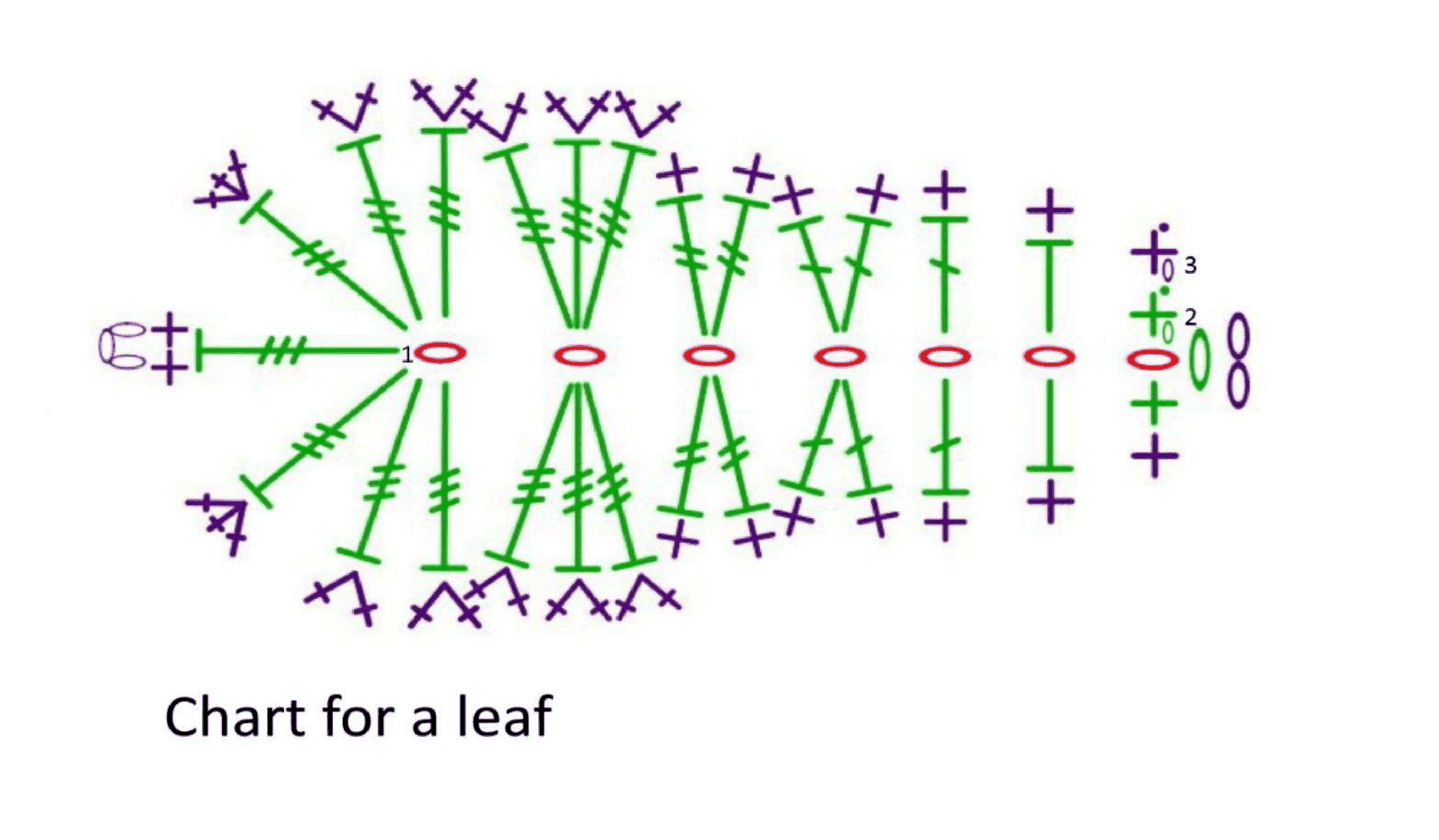
Ch 7. Ch 1 and sc in the first chain. Work hdc in the second chain, dc in the third, 2 dc in the fourth, 2 tr in the fifth, 3 dtr in the sixth and 7 dtr in the seventh chain. Work back along the opposite side of the foundation: 3 dtr in the sixth chain, 2 tr in the fifth, 2 dc in the fourth, dc in the third, hdc in the second and sc in the first. Ch 1 and join to the first sc.
For the edge, ch 1 and sc along the lower side until you reach the thirteen dtr around the tip. Over those thirteen dtr, the source gives sc groups of 1, 1, 1, 2, 2, 3 and 1 into the first through seventh dtr; ch 2, then sc again into that seventh dtr, 3 sc into the eighth and 2 sc into each of the ninth through thirteenth dtr. Sc in each remaining stitch down the other side. Ch 2 and join to the first sc. Fasten off. The chart shows the tip and the return edge; keep it beside the written sequence.
5-point sepal
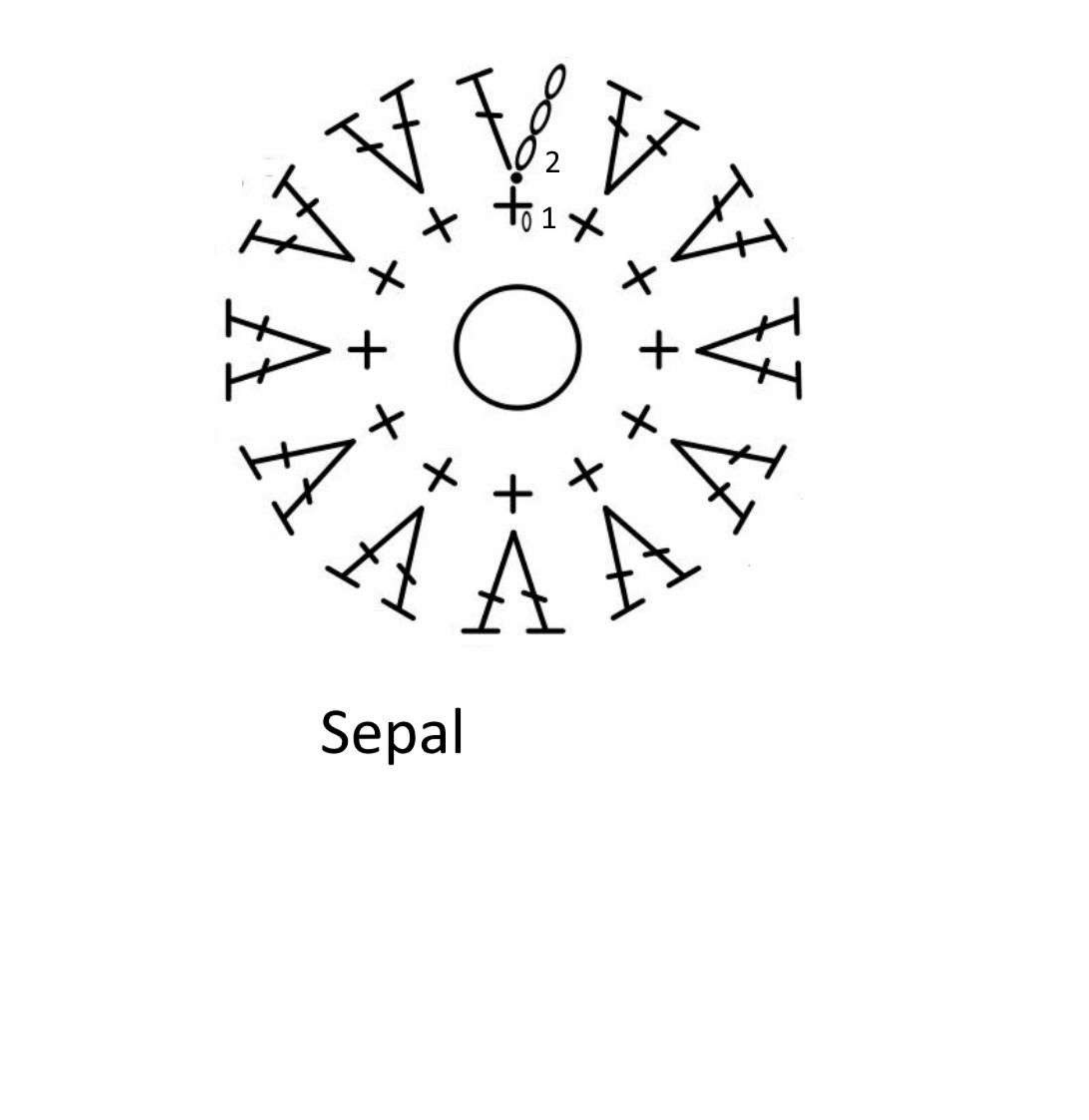
Make 10 sc in a magic ring and join, leaving the central hole large enough to accept the wrapped stem. Ch 3, counting as dc, dc in that same stitch and 2 dc in every remaining stitch. Join to the third starting chain. There are 20 dc positions.
For the pointed outer round, ch 4 and work a three-tr cluster across the next three dc: leave the final loop of each tr unclosed, then close them together. Ch 4 and sl st into the next dc. Repeat the cluster-and-chain point around, joining the final point at the start. There are 5 points. This sepal is made separately and slid onto the stem before gluing it beneath the flower.
Make the Daisy Disc
| Round | Instructions |
|---|---|
| 1 | With white, ch 1 and work 16 sc into a magic ring. Tighten enough to define the center but leave room for the stem. Join to first sc. |
| 2 | Ch 3 for the first dc, dc in the same first sc, ch 1. In each remaining sc work (2 dc, ch 1). Join to the third starting chain. There are 32 dc and sixteen separating ch-1 spaces. |
| 3 | Ch 3 plus ch 1 to begin. Work (dc, ch 1, dc, ch 1) into the next ch-1 space, then dc into the next dc and ch 1, following the original chart around the disc. Continue the alternating single-dc and increased space placements, then join to the third starting chain and fasten off. |
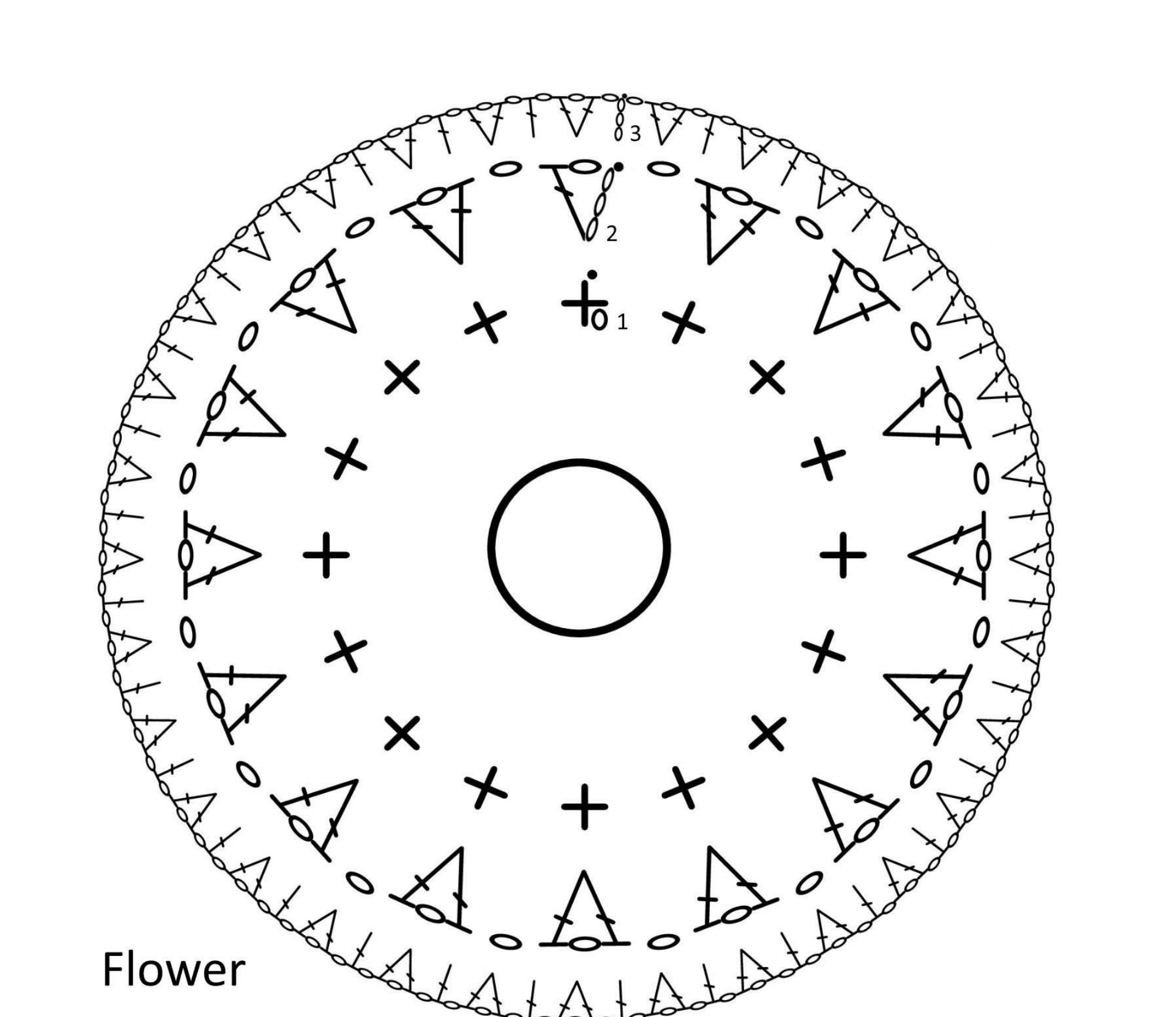
Use the chart to keep every outer separator chain and its anchor visible. The disc should begin to ruffle as the outer stitch count expands; do not flatten away all the fullness before attaching the raised center.
Crochet the Yellow Daisy Center
| Round / step | Instructions | Count |
|---|---|---|
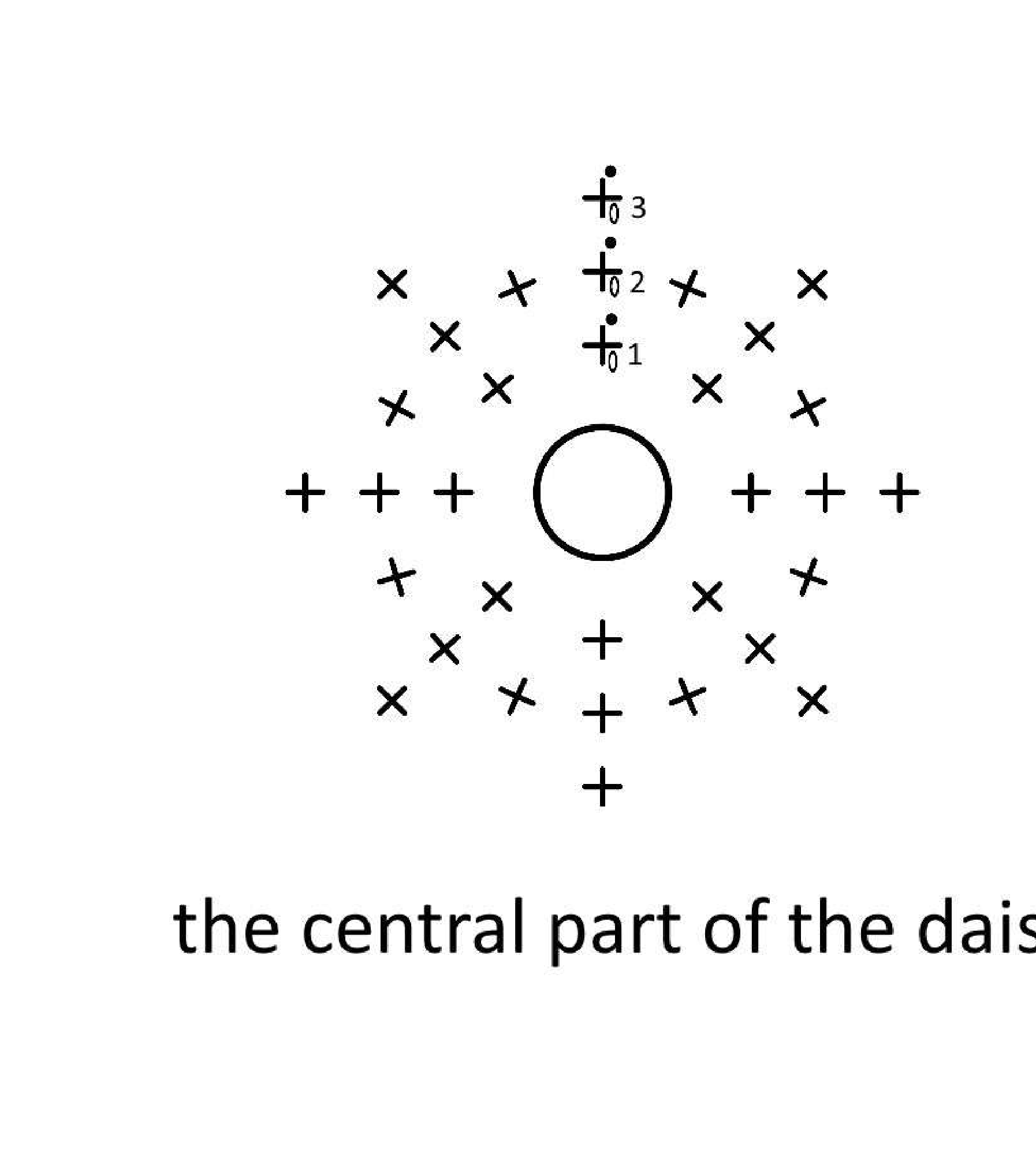
| 1 | 8 sc in MR; join. | 8 |
| 2 | Ch 1, 2 sc in every stitch; join. | 16 |
| 3 | Ch 1, sc in the first stitch, then skip one and sc in the next around. Join and fasten off. | 8 |
Assemble the Daisy
- Shape the yellow center into a button and glue its underside into the middle of the white disc.
- Apply a small amount of glue in the remaining opening and to the upper end of the wrapped stem. Insert the stem and let the joint set.
- Slide a white five-point sepal up the stem and attach it under the flower. A green sepal may show through the white disc, which is why the source uses white here.
- Glue the narrow base of a pointed green leaf to the stem. Arrange the ruffles around the center.
Make the Gathered Carnation
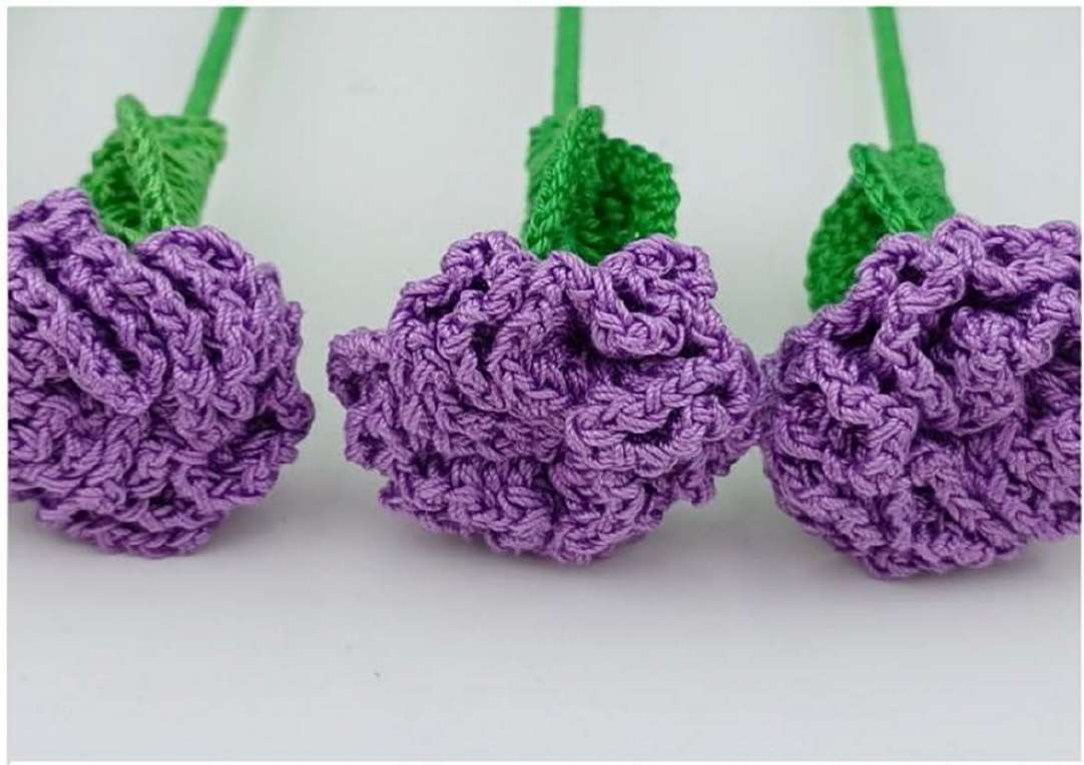
Use the carnation color for 20 sc into a magic ring. Join. Work the next two disc rounds in the same manner as the daisy, extending the repeated groups around the twenty-stitch foundation. Keep the central opening available for the stem. Fasten off with the disc complete.
Thread a needle with matching yarn. Pass it alternately under and over the bottoms of the dc in the second round, continuing all the way around. Pull the two thread ends to gather the disc into a ruffled head and tie securely. The tutorial uses green thread to make this path visible; use the carnation color for the finished piece.
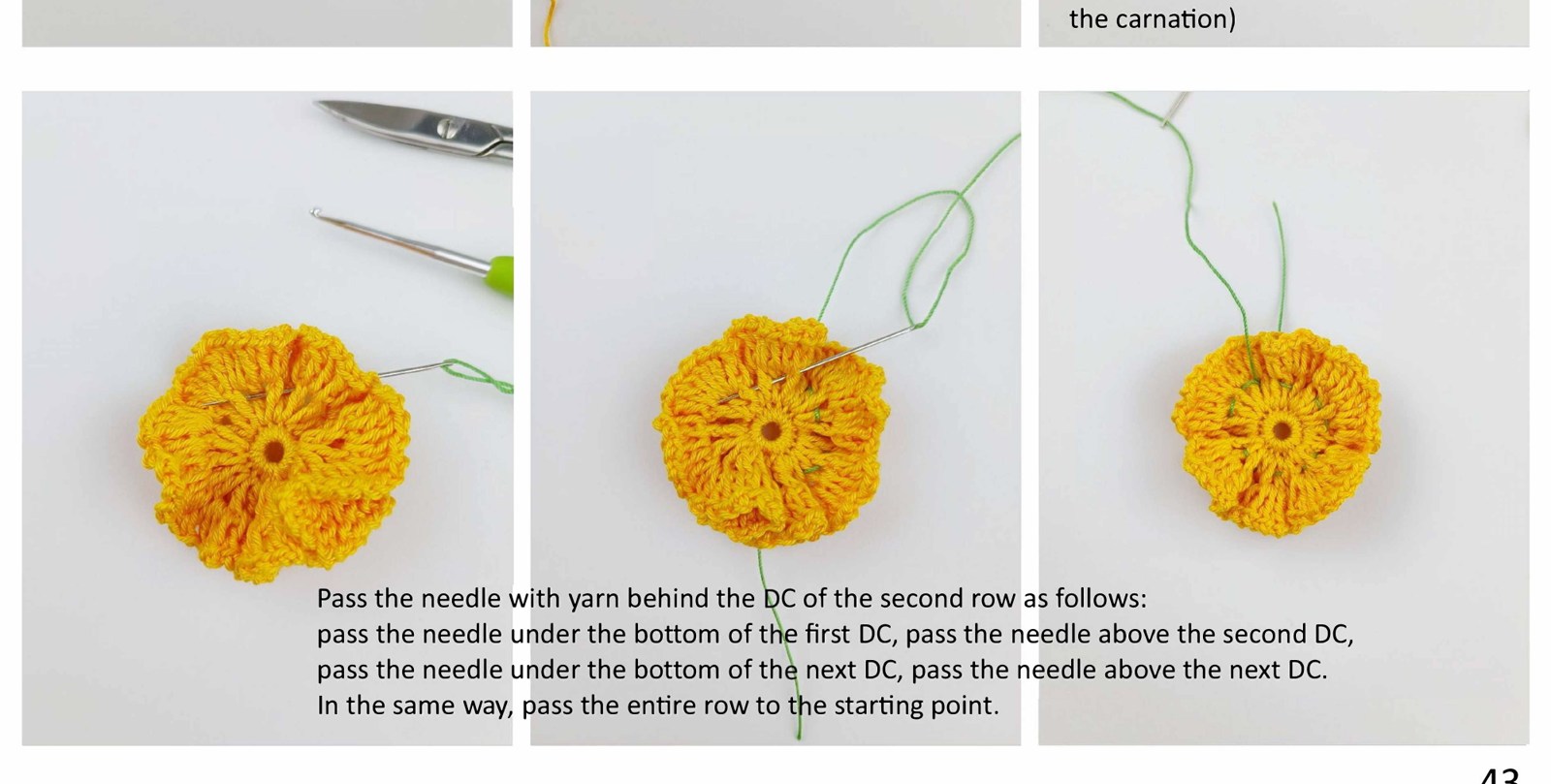
Open the gathered head enough to apply a small amount of glue inside, then press it closed until the joint sets. Glue the wrapped stem into the base opening. Slide the sepal beneath the bloom and attach it, then glue a leaf to the stem. Arrange the ruffled upper edge without pulling out the gathering knot.
Bind the Mixed Bouquet
Combine these daisies and carnations with the roses, layered five-petal flowers and gathered buds from crochet bouquet Part 1. The opening source plan makes five of each type, twenty-five flowers total; the final photograph also refers to a different, larger arrangement. Choose the quantities that suit your bouquet rather than treating that photo as a fixed flower count.
Align the lower stem ends and hold the flowers at a range of heights so the centers remain visible. Wrap yarn firmly around the gathered stems, secure its ends with glue and check the leaf placement. Keep the binding below the flower heads so the bouquet does not look compressed.
Daisy and Carnation Finishing Checks
- Each daisy has its own yellow button center and a white backing sepal.
- The carnation gathering yarn matches the flower color and its knot is hidden below.
- The stems are firmly attached before the bouquet is bound.
- The leaves are attached at their narrow bases, with their shaped faces visible.
More Crochet Projects
For another project, try our crochet bluebell flowers or explore a wired crochet lily with buds.
Pattern and Photo Credits
The supplied CrochetBouquetPatternPart2 PDF, original pages 36-45, with shared leaf and sepal construction from Part 1. The designer is not identified in the supplied files. This is an editorial adaptation of the supplied pattern, with the original designer credited. Reference photographs show the source project.
Leave a Reply