Ravenclaw Crochet Scarf Pattern: 30-Stitch Colorwork Guide
· admin
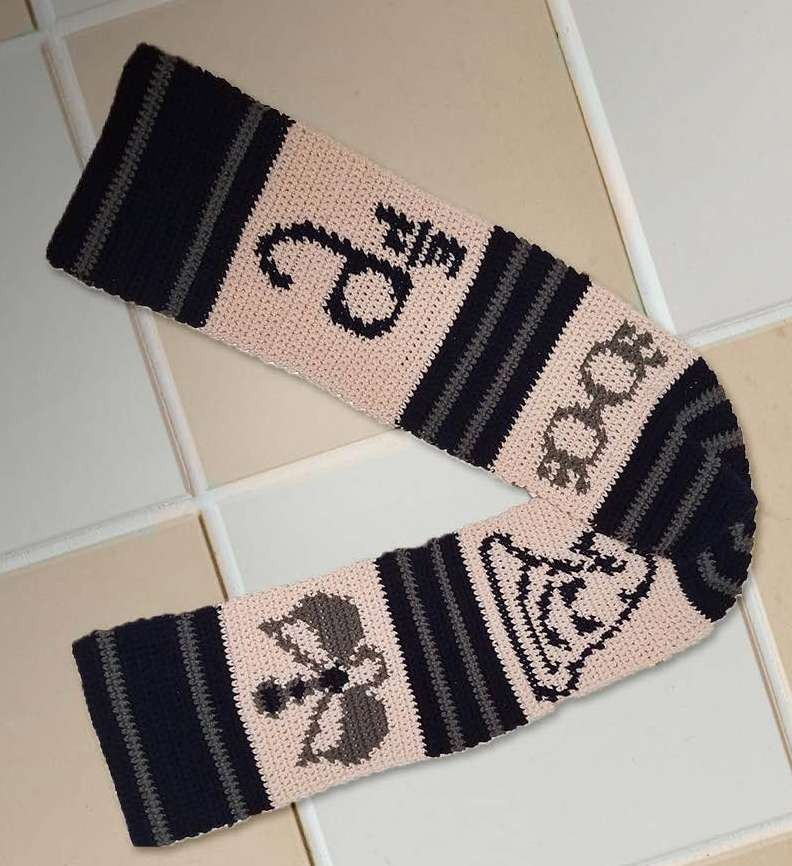
This Ravenclaw crochet scarf pattern uses single crochet and color changes to create a narrow graphic scarf with house-inspired motifs and striped sections. The source supplies 222 numbered color-run rows rather than a conventional crochet-symbol chart. Its original colored tables are reproduced below so the color information remains attached to the stitch counts.
Project at a glance
| Detail | Project information |
|---|---|
| Skill level | Intermediate single-crochet colorwork |
| Finished size | 30 stitches wide × 222 rows; physical dimensions depend on gauge |
| Technique | Crochet; US stitch terms in this article unless a source image is labeled otherwise |
| Construction | Follow the project stages below |
Materials and tools
- Worsted / medium-weight yarn; the source uses Premier Just Yarn
- Source quantities: Crepe 2, Navy 4, Stormy 3; ball weights and yardage are not stated
- 4.5 mm crochet hook, yarn needle, scissors and small yarn bobbins
- Markers for the first and last stitch and a row counter
Stitches and pattern notes
ch = chain; sl st = slip stitch; sc = single crochet; hdc = half double crochet; dc = double crochet; tr = treble crochet; st = stitch; sp = space; RS/WS = right/wrong side. A bracket followed by × 3 means repeat the entire bracket three times.
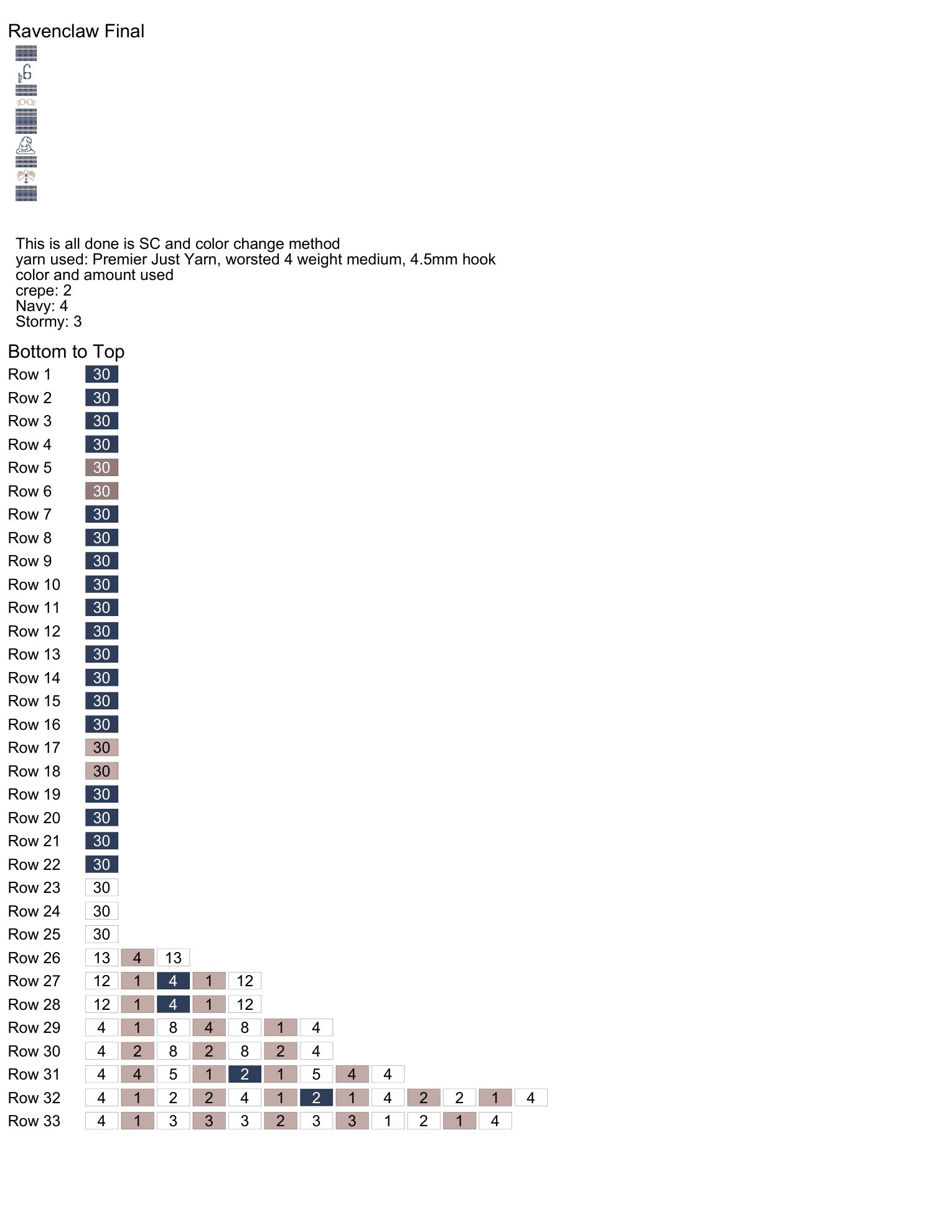
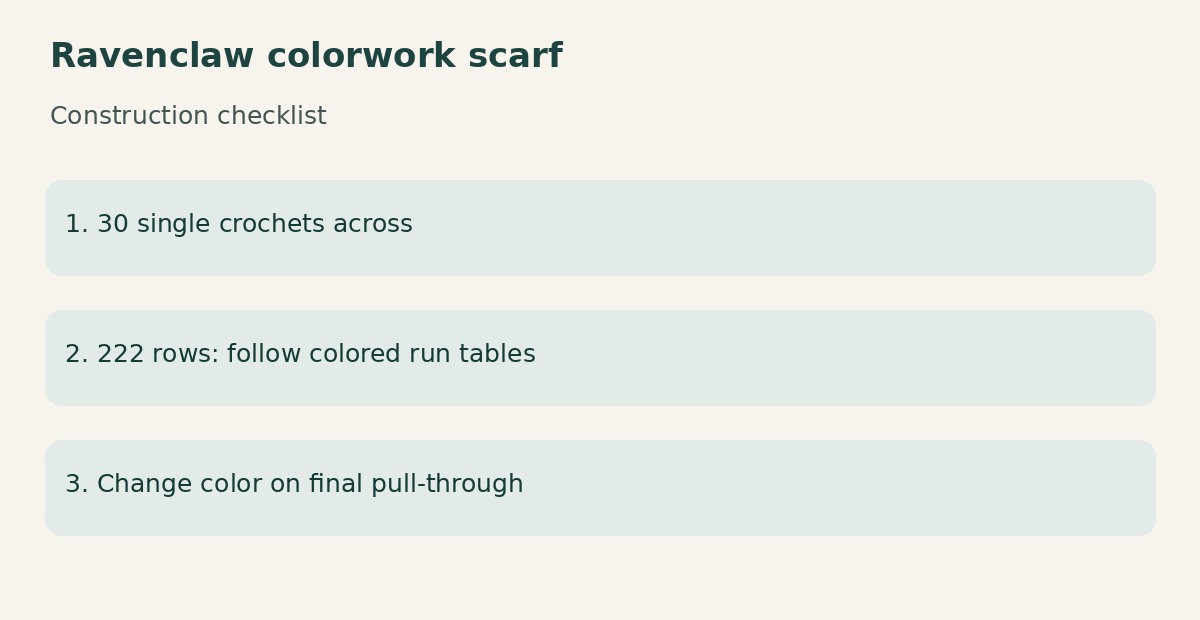
Every number in a colored table cell is a run of that many sc in the cell’s color. Read each numbered row in the printed sequence and turn after completing its 30 stitches. These run lists already describe the working order; do not reverse every second list as though it were a fixed-view graph. Use ch 1 as turning height and do not count it as a stitch.
Resolve the source palette before starting
The materials list names three yarn shades, while the final table legend lists four chart colors: bright white B5200, light shell gray 453, medium shell gray 452 and navy 312. Those DMC numbers are chart color labels, not instructions to crochet the scarf with embroidery floss. The source does not explicitly map all four chart colors to its three yarn names. For an exact four-color table interpretation, choose four distinguishable matching yarn shades; if reducing the two gray values to one yarn, recognize that as a deliberate three-color adaptation.
Foundation and color-change method
An editorial setup for the stated width is to chain 31 and work 30 sc from the second chain, using the color shown in Row 1. Work the numbered tables from Row 1 through Row 222, keeping 30 sc in every row. To change color, begin the last sc of the old color, then draw the new color through its final two loops. The next stitch will begin in the new color. Keep unused strands on the same designated back of the fabric.
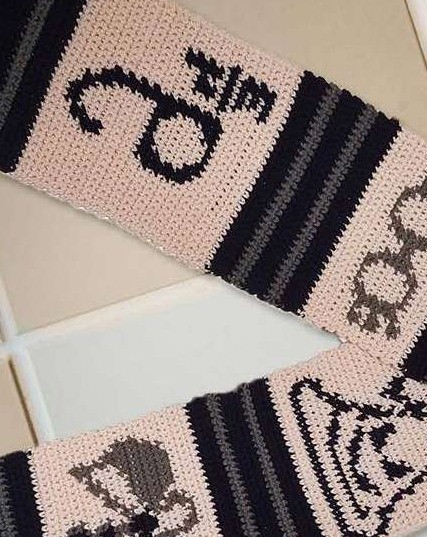
Use bobbins for separate motif areas so a long carried strand does not show through the pale background. When carrying a short strand, leave enough slack for the fabric to lie flat. Spread the last few stitches on the hook before tightening the new yarn: tight floats can make the motif panel narrower than the striped sections.
Complete original colored row-run instructions
The five source pages below cover every numbered row. Open each image to enlarge it and mark completed rows on a separate counter. Follow the colored background of each number, not just the text color. A plain-text extraction loses those background colors and is not a complete version of the pattern.
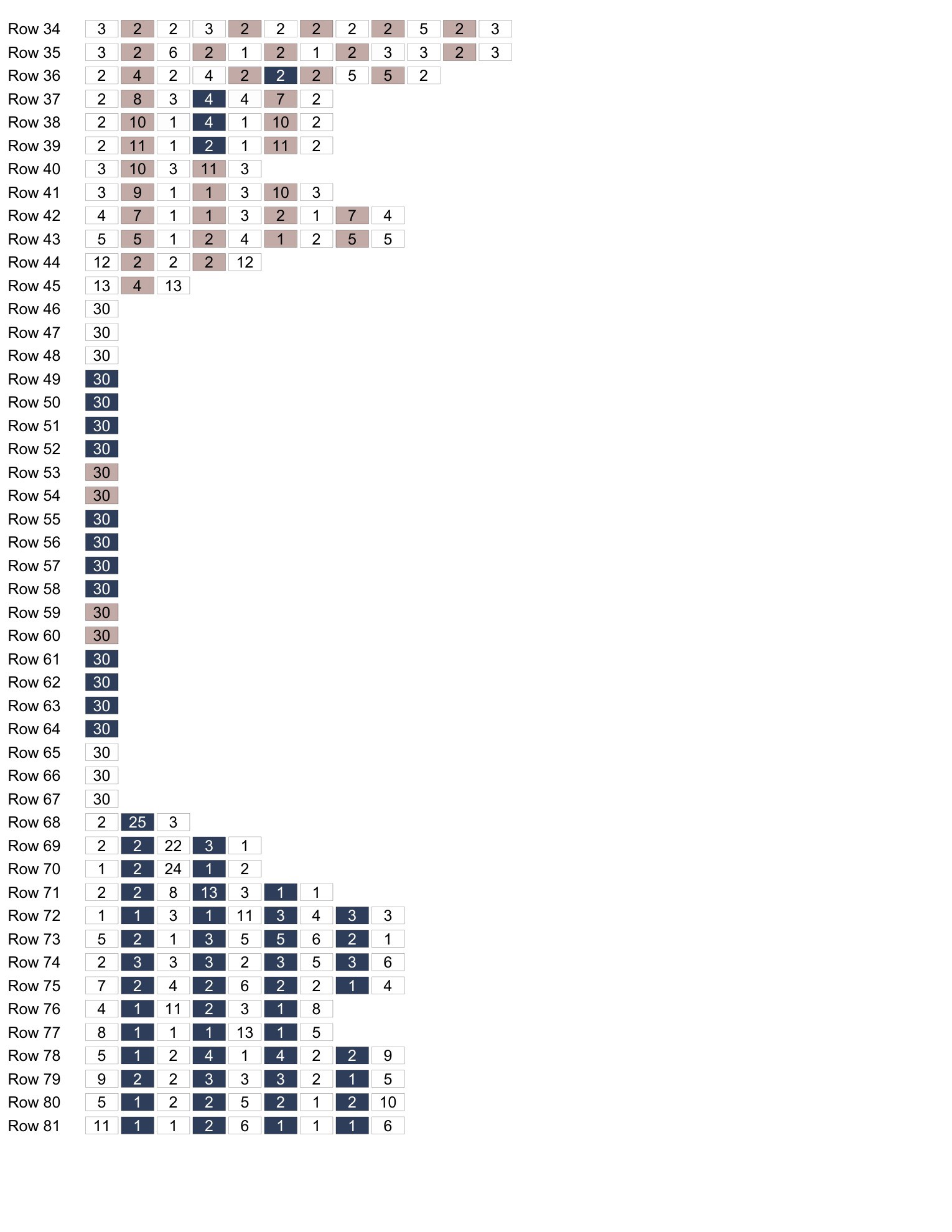
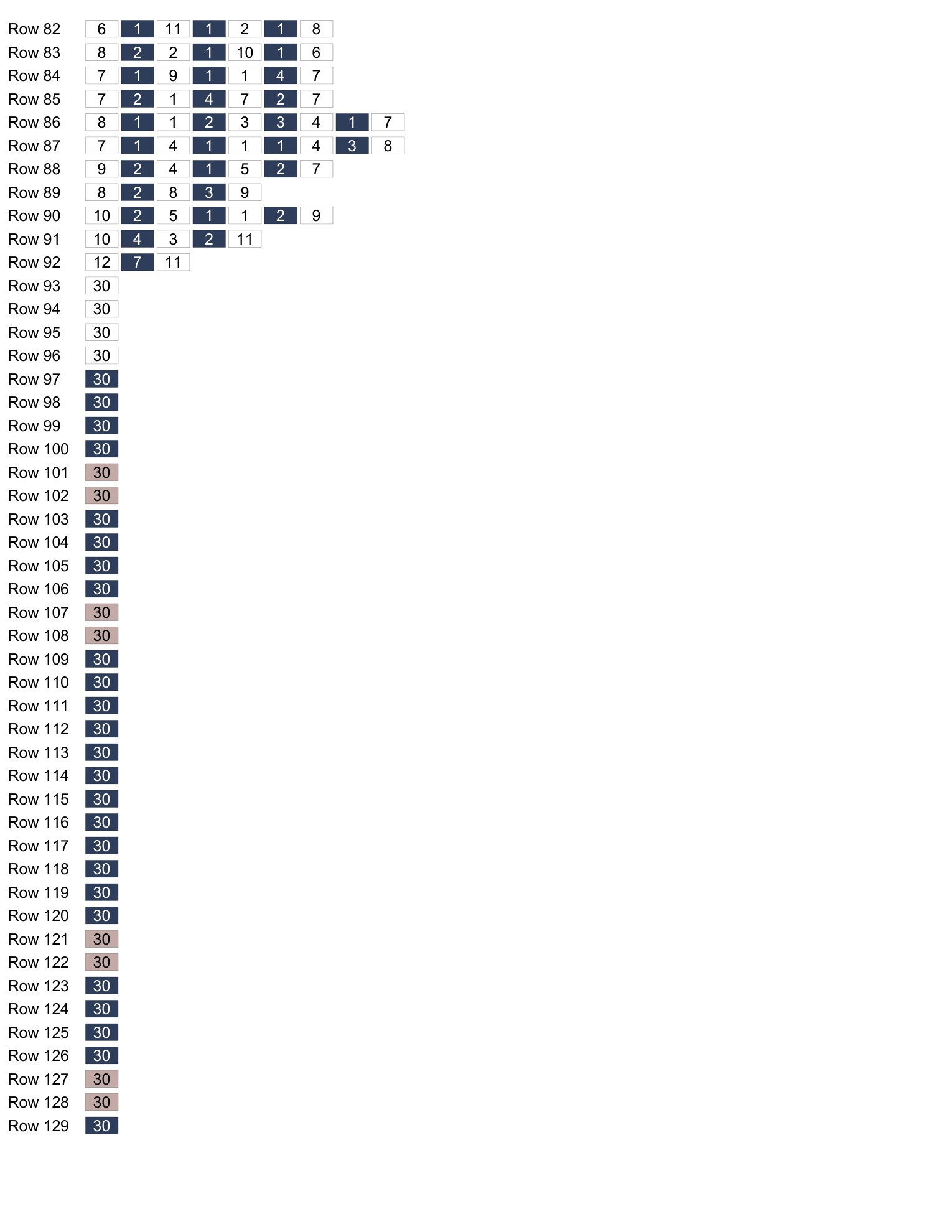
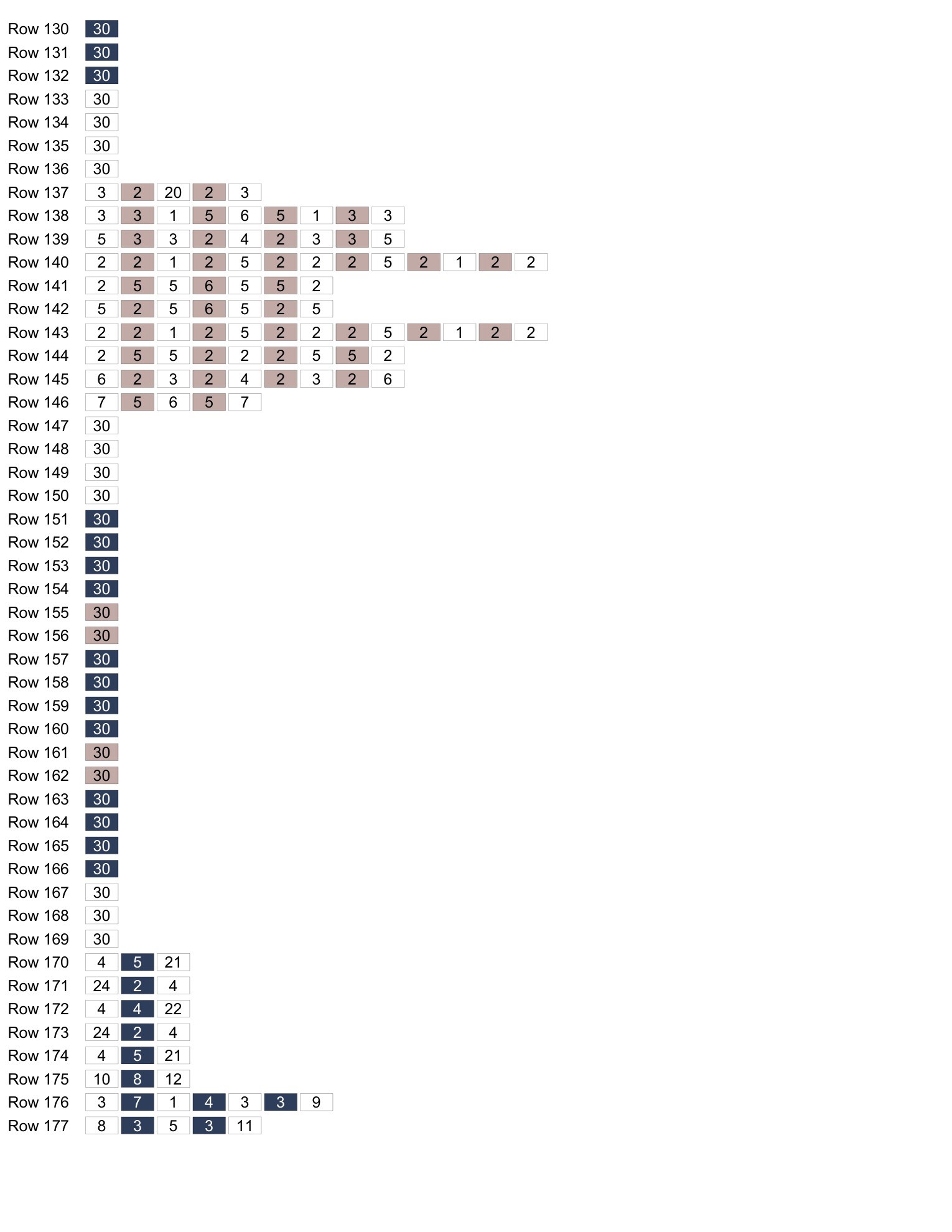
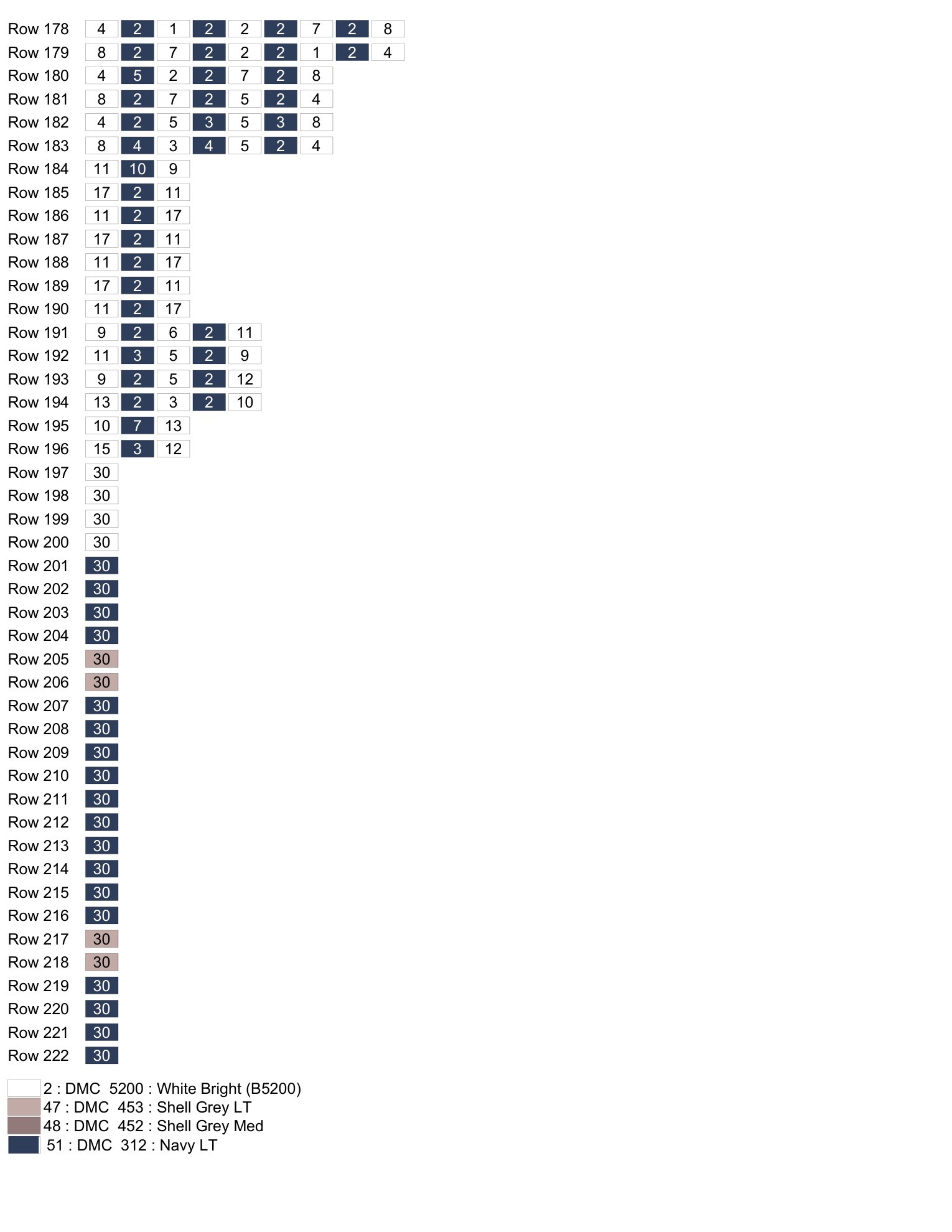
Finish the scarf
After Row 222, fasten off and weave in each color tail on the matching-color area where practical. Check both edges before blocking. Wash or dampen according to the yarn label, then lay the scarf flat without stretching the colorwork. No reliable finished length or stitch gauge is supplied in the source, so measure your own swatch and finished fabric instead of attaching an unsupported size to the row count.
Tips for a clean finish
- Count all runs in a row before working a dense motif section; they should total 30 stitches.
- Keep the original colored pages available beside your work.
- Try a small two-color swatch to settle the color-change tension before beginning the full scarf.
Frequently asked questions
Can I follow only the extracted numbers?
No. The numbers need their colored cell backgrounds to identify the yarn color. Use the original table images.
Does the source require three or four colors?
It names three yarn shades but has a four-color chart legend. That mismatch is disclosed above so you can choose your palette before starting.
More scarf and shawl ideas
Explore the Scarves & Shawls collection for more neckwear projects. Compare the yarn weight, width and construction before choosing your next pattern: an airy lace wrap and a dense winter scarf need different fabrics even when they use similar stitches.
Pattern source and credit
Based on Ravenclaw scarf Pattern.pdf, Whole PDF. Designer not named in the readable source; an unofficial fan-inspired project. Photographs show the original source samples; construction checklists are editorial illustrations. The article reorganizes the source and adds practical explanations. Source ambiguities are identified where relevant; this is a document-based adaptation, not a claim of physical testing.
Open the original pattern in Drive to compare the instructions, source photographs and original layout.
Leave a Reply