Broomstick Lace Shawl Crochet Pattern: Airy Center-Out Wrap
· admin
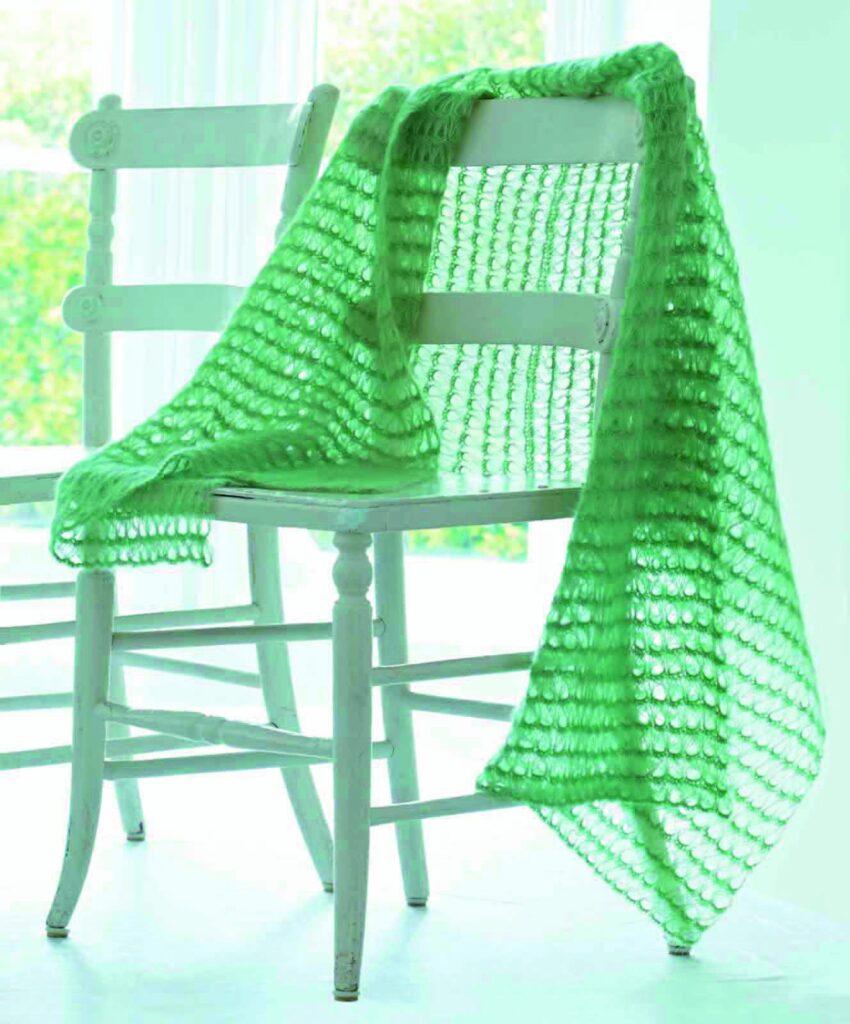
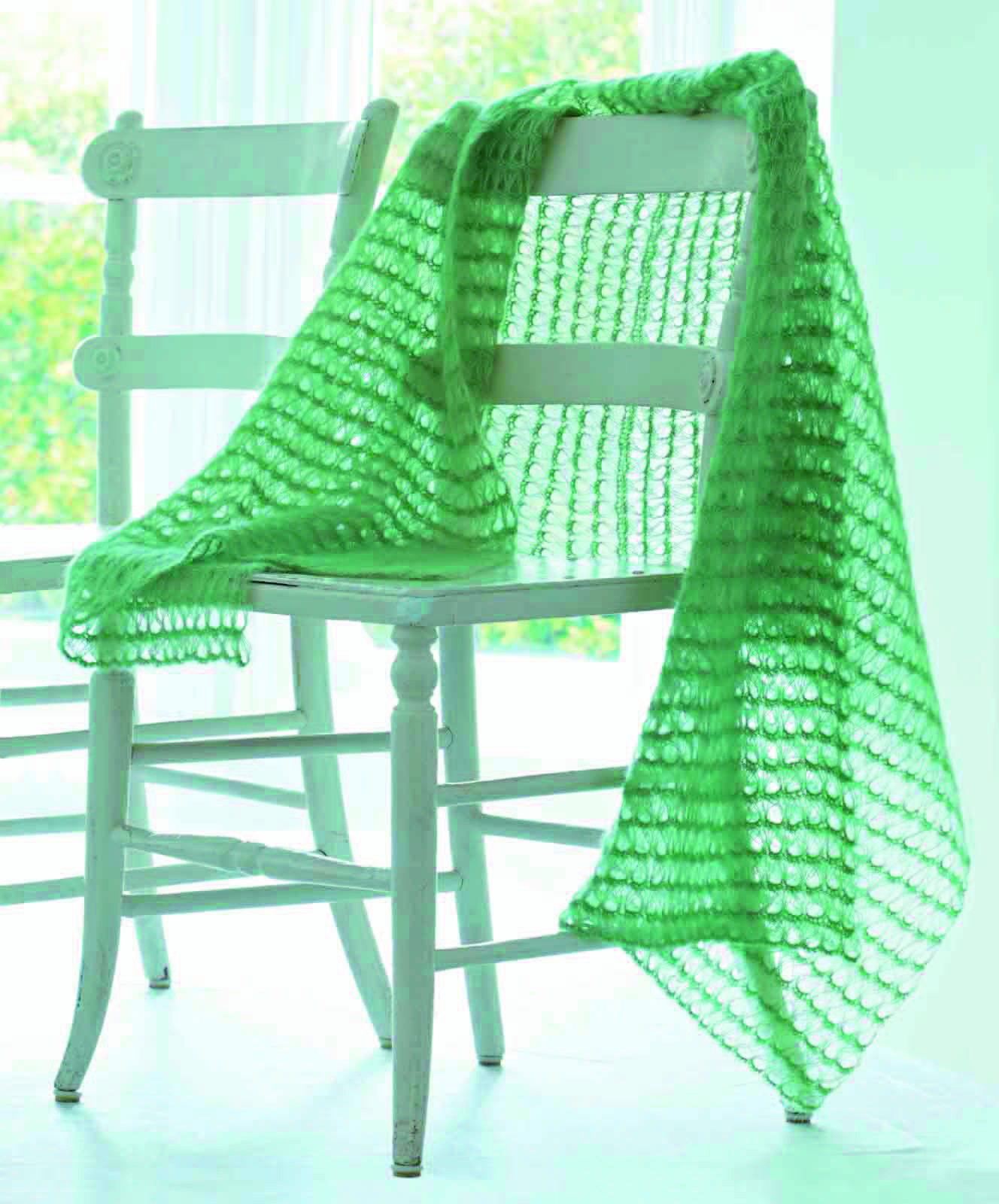
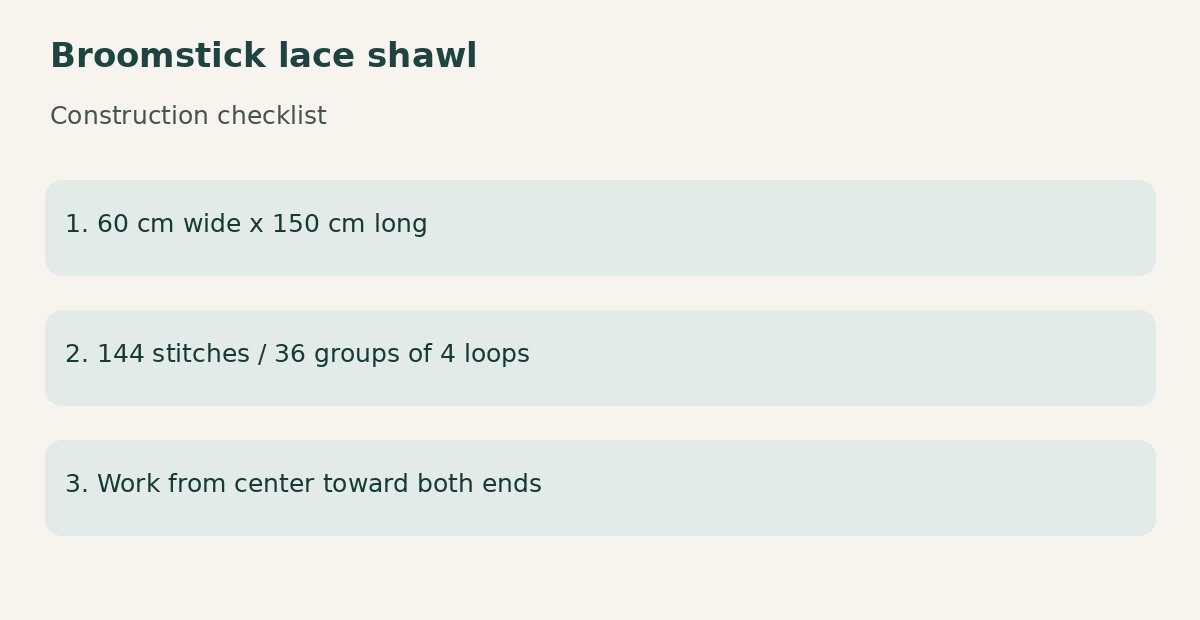
This broomstick lace shawl crochet pattern creates an airy rectangular wrap with long, grouped loops. Its distinctive feature is a central single-crochet spine: you work half the shawl in one direction, then return to the foundation and grow the other half outward. That construction gives the two ends a balanced appearance and makes the center an easy place to check the width.
Project at a glance
| Detail | Project information |
|---|---|
| Skill level | Easy crochet with a new loop technique |
| Finished size | Approximately 60 × 150 cm / 23½ × 59 in |
| Technique | Crochet; US stitch terms in this article unless a source image is labeled otherwise |
| Construction | Follow the project stages below |
Materials and tools
- Lace-weight mohair: source uses 5 × 25 g balls Rowan Kidsilk Haze, 210 m / 230 yd per ball, Meadow 581
- 4.5 mm crochet hook; a smaller pointed hook can help pick up loops
- 8 mm broomstick or long knitting needle, approximately 35–40 cm long
- Yarn needle, stitch markers and blocking pins
Stitches and pattern notes
ch = chain; sl st = slip stitch; sc = single crochet; hdc = half double crochet; dc = double crochet; tr = treble crochet; st = stitch; sp = space; RS/WS = right/wrong side. A bracket followed by × 3 means repeat the entire bracket three times.
The source gauge is 6 groups of 4 loops, equivalent to 24 sc, and 4 pattern rows per 10 cm. Each group produces four sc, so the width remains 144 stitches or 36 groups. The loop-pickup pass and the return pass together form one pattern row. Keep every loop the same height rather than pulling it tight against the shaft.
Build the central foundation
Make a loose 144-chain foundation, leaving a generous tail in case you need to adjust the chain count. Following the source, work one sc into the back bump of every foundation chain, aiming for 144 sc. The source uses all 144 chains rather than a conventional skipped turning chain. An editorial alternative is to chain 145 and work 144 sc from the second chain; use one approach consistently, and count before picking up loops.
Work the broomstick lace repeat
| Step | Instructions | Checkpoint |
|---|---|---|
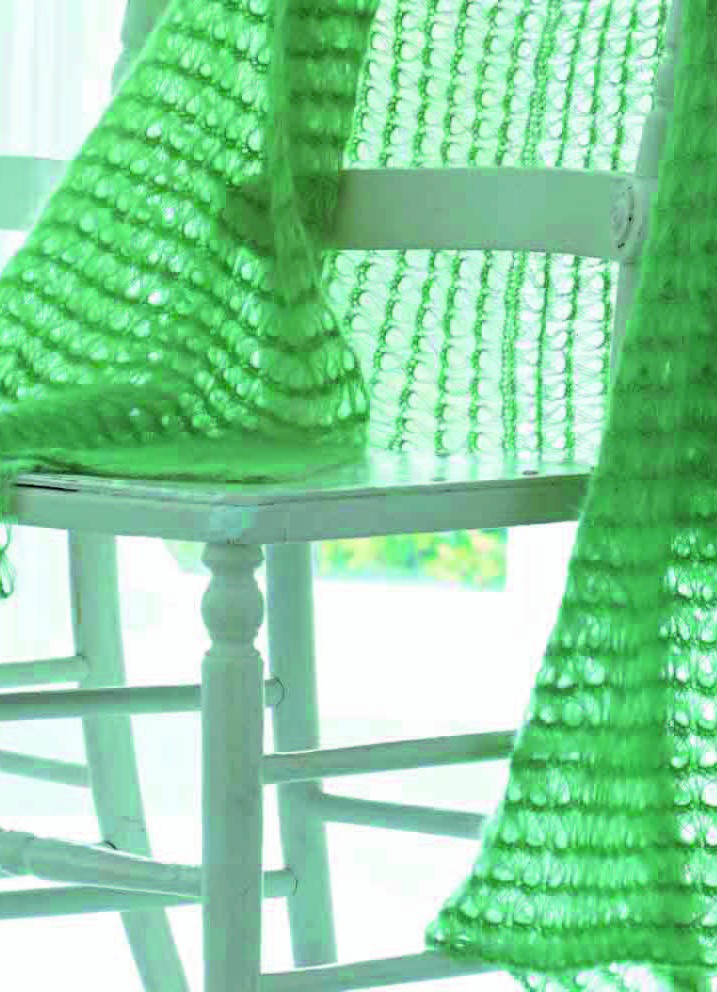
| Pickup pass | Draw one long loop through each of the 144 sc and place it over the broomstick. Keep the loops untwisted. | 144 loops |
| Return pass | Slide the first four loops off together. Insert the hook through the whole group and work four sc around that group; repeat across. | 36 groups; 144 sc |
| Continue | Pick up one loop from each sc again, then repeat the grouped return pass. Work until this half measures about 75 cm from the spine. | Half the finished length |
A small chain used to secure the first group is a setup aid, not an extra sc. Count the four sc within that first group so the edge does not gain a stitch. Slide loops along the needle gradually; you do not need to crowd the entire width into a short section of its shaft.
Work the matching second half
Fasten off the first half. Join yarn to the opposite end of the original sc spine, farthest from the foundation tail. Work into the available foundation loops and repeat the same 144-loop, four-loop-group pattern outward. Make the second half the same length as the first, comparing both halves laid flat without pulling on the lace.
Finish the wrap
Weave ends along the firm sc groups rather than through the open loops. Pin the shawl gently to its approximate dimensions, spritz lightly and let it dry naturally. Heavy stretching or pressing can flatten the mohair halo and enlarge the loops unevenly.
Tips for a clean finish
- Count groups as well as individual stitches; 35 or 37 groups reveals a missed or extra pickup.
- A smooth practice yarn makes the loop sequence easier to learn before using fuzzy mohair.
- The source allows DK yarn for a denser wrap; swatch again because the fabric and yardage will change.
Frequently asked questions
Can I make the shawl narrower?
Yes. Keep the working stitch count divisible by four, then make a swatch to calculate the width. Every group contains four picked-up loops and four return-pass sc.
Why is the shawl worked from its center?
Both halves start from the same spine, so their loop direction mirrors. Working the full length in one direction would change that visual symmetry.
More scarf and shawl ideas
Explore the Scarves & Shawls collection for more neckwear projects. Compare the yarn weight, width and construction before choosing your next pattern: an airy lace wrap and a dense winter scarf need different fabrics even when they use similar stitches.
Pattern source and credit
Based on [BONUS 2] Crochet Colors Theory.pdf, Printed pages 202-203; PDF pages 204-205. The readable source does not identify an individual designer. Photographs show the original source samples; construction checklists are editorial illustrations. The article reorganizes the source and adds practical explanations. Source ambiguities are identified where relevant; this is a document-based adaptation, not a claim of physical testing.
Open the original pattern in Drive to compare the instructions, source photographs and original layout.
Leave a Reply