
Top 7 One-Piece Crochet Bandana Patterns for Simple Assembly
· admin
Crochet Pattern Nest / Curated pattern guide
If you enjoy watching one piece of fabric grow, a continuous bandana body can be a satisfying alternative to joining lots of small motifs. These seven patterns keep the main construction in one piece while offering different textures, borders and support formats. They still need finishing, especially around the ties. Compare the shape and the final edge so that a simple assembly plan does not hide a finishing task you would rather avoid.
Compare the options
Access labels describe the route linked below. Free blog instructions and an optional paid PDF are different formats of a design, so alternate listings are not counted as extra patterns. The numbering is a reading order for this guide, rather than a claim about sales or popularity.
| Pattern | Access route | Construction |
|---|---|---|
| 1. Classic Crochet Kerchief | Paid PDF | One-piece granny triangle |
| 2. Easy Crochet Bandana | Free online | One-piece row-grown triangle |
| 3. Scalloped Crochet Bandana | Free online | One-piece row-grown triangle |
| 4. Caron Crochet Hair Bandana | Free PDF | One-piece granny triangle |
| 5. Delicate Dream Bandana | Free online; PDF optional | One-piece lace triangle |
| 6. Harper Bandana | Paid PDF | One-piece triangle |
| 7. Easy Crochet Bandana — No Bulky Sides | Free video | One-piece granny triangle |
The pattern shortlist
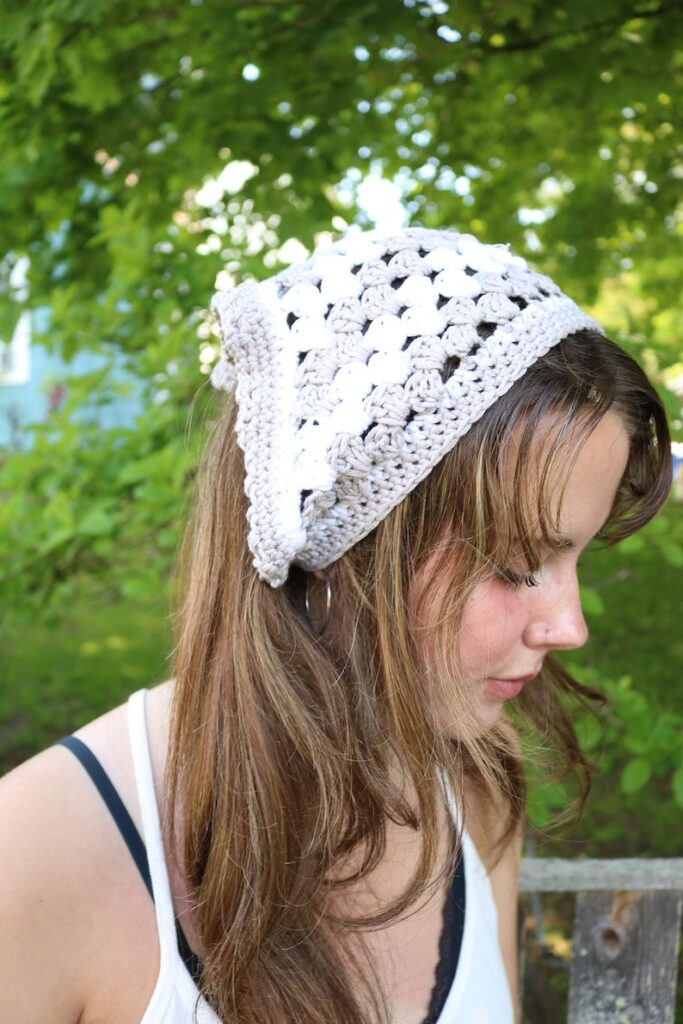
Classic Crochet Kerchief
By Susan Frick / A Box of Twine · Etsy
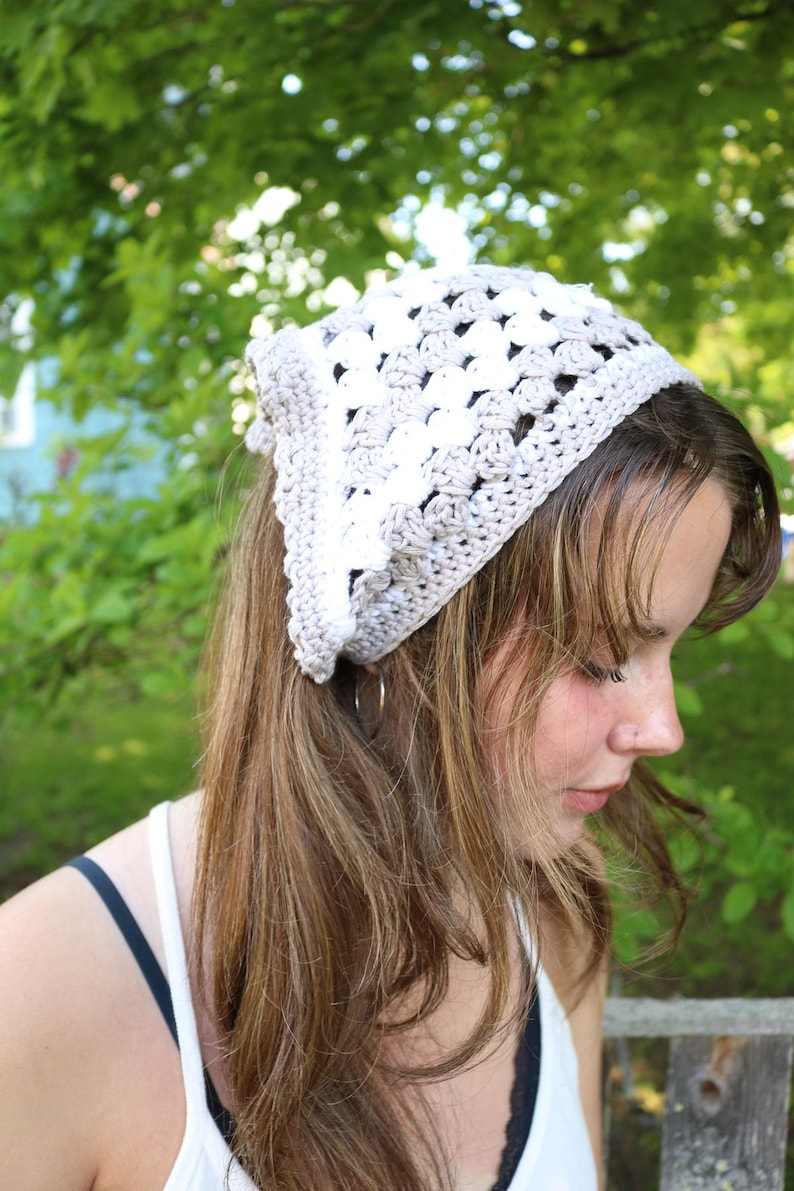
A beginner granny kerchief with an illustrated, printer-friendly PDF.
- Access
- Paid PDF
- Yarn reference
- Light weight 3 cotton
- Designer level
- Beginner
Planning note. Follow the growth of the body before thinking about decoration; an even triangle gives the finishing a more reliable starting point.
View the designer’s patternEasy Crochet Bandana
By VivCrochets · Designer website
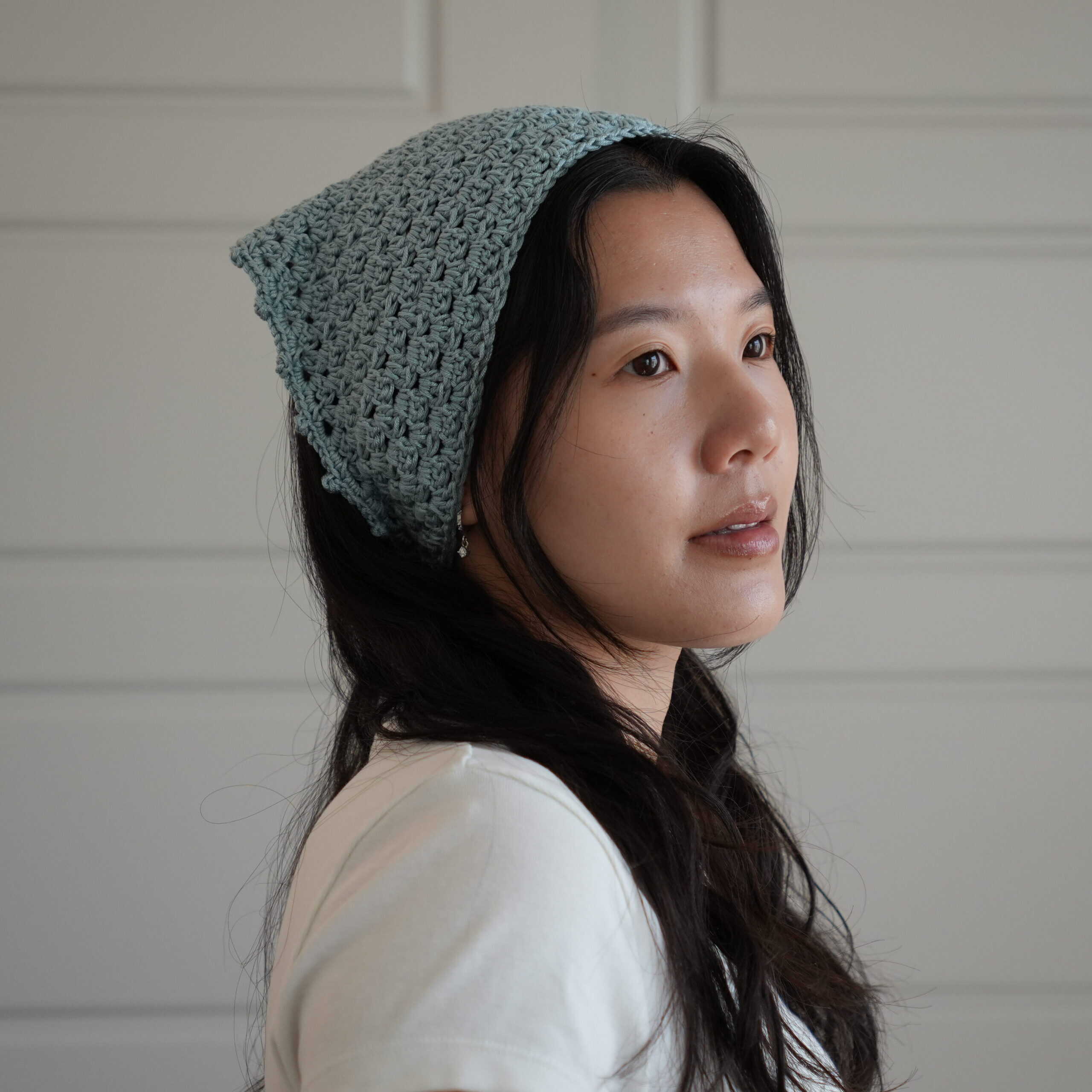
Granny-cluster rows lead to straps and optional picots.
- Access
- Free online
- Yarn reference
- Light weight
- Designer level
- Beginner
Planning note. Check how the working yarn travels into the first tie so you can reserve the right amount and avoid an unnecessary join.
View the designer’s patternScalloped Crochet Bandana
By VivCrochets · Designer website
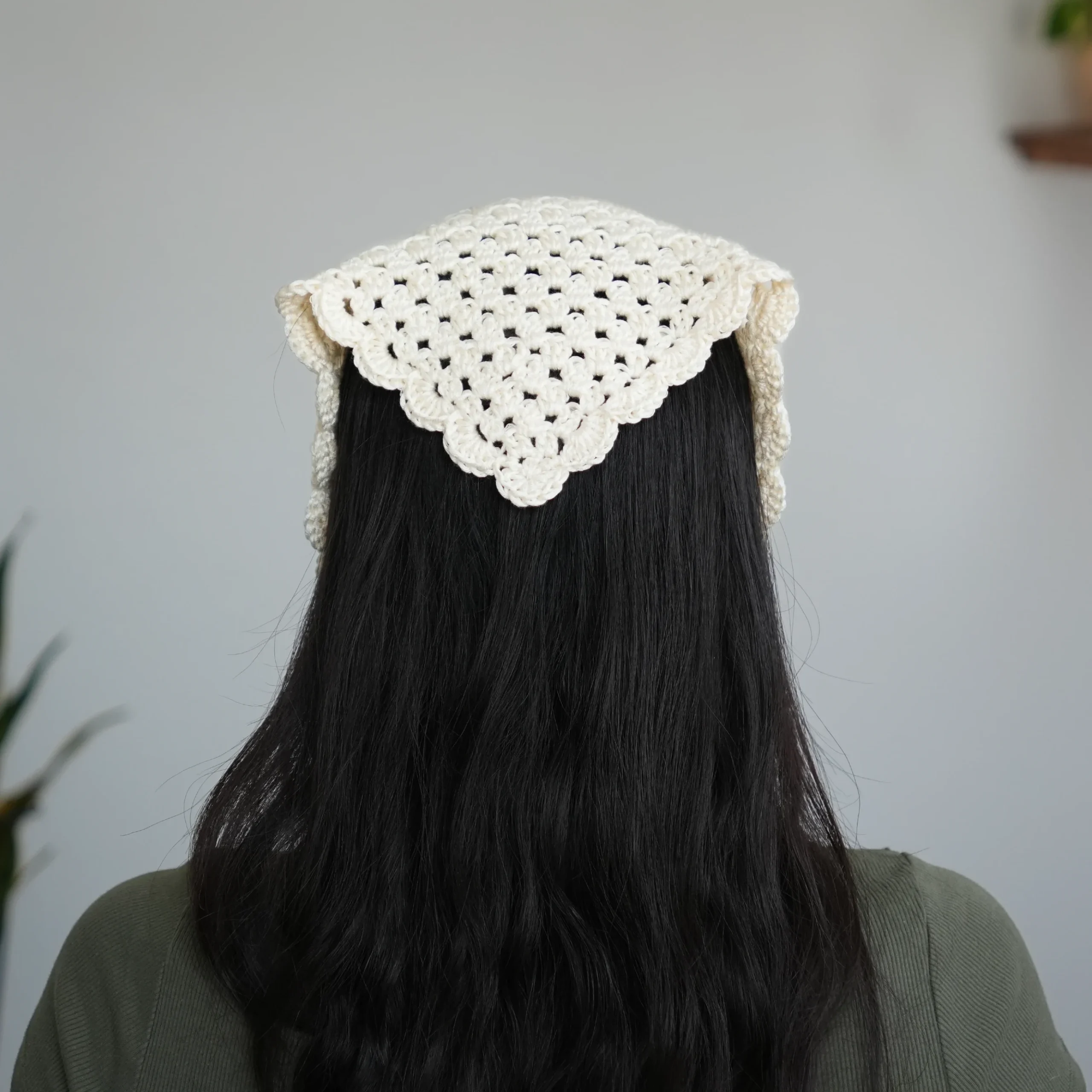
A row-grown granny triangle finishes with a scalloped border.
- Access
- Free online
- Yarn reference
- See designer's supply list
- Designer level
- Beginner
Planning note. Measure the body and the ties separately. A long fastening span should not hide a triangle that offers less coverage than you wanted.
View the designer’s patternCaron Crochet Hair Bandana
By Caron / Yarnspirations · Yarn brand
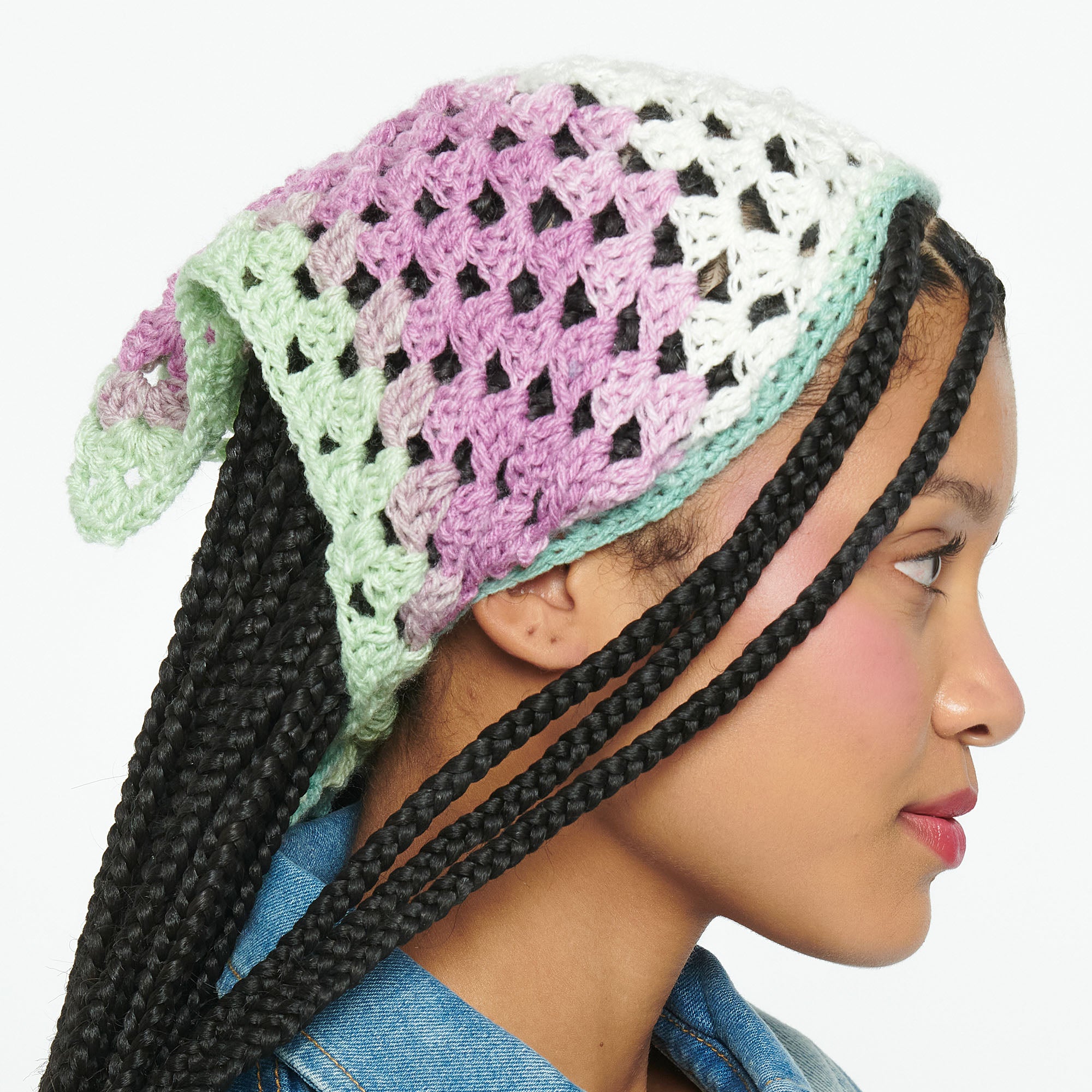
An open granny-triangle hair bandana with ties.
- Access
- Free PDF
- Yarn reference
- Light weight; Caron Skinny Cakes
- Designer level
- Beginner
Planning note. Use the source sizing notes for the main body, then test the fastening span around the head before fixing your final yarn choice.
View the designer’s patternDelicate Dream Bandana
By Selina Veronique · Designer website
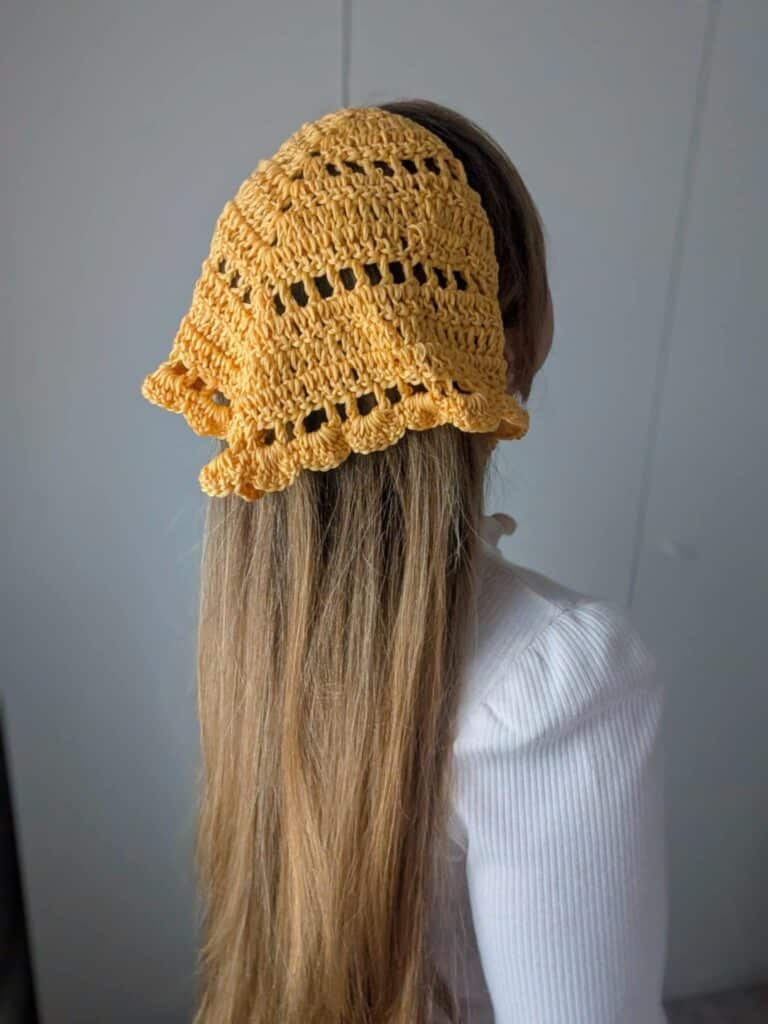
A lacy cotton bandana with adjustable ties.
- Access
- Free online; PDF optional
- Yarn reference
- DK mercerized cotton
- Designer level
- Easy / Beginner
Planning note. Keep the edges consistent as the piece grows, and check the final body row before moving into a different border sequence.
View the designer’s patternHarper Bandana
By Stefanie Ghea / lankabyme · Ravelry
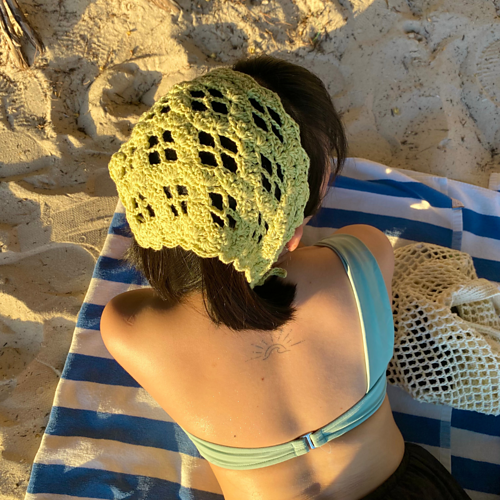
A seamless triangle includes sizing notes and a tester look book.
- Access
- Paid PDF
- Yarn reference
- Fine weight 1 or 2
- Designer level
- Advanced beginner
Planning note. Follow the growth of the body before thinking about decoration; an even triangle gives the finishing a more reliable starting point.
View the designer’s patternEasy Crochet Bandana — No Bulky Sides
By Ali Russell / Dorothy Jean Crochet · Ravelry / YouTube
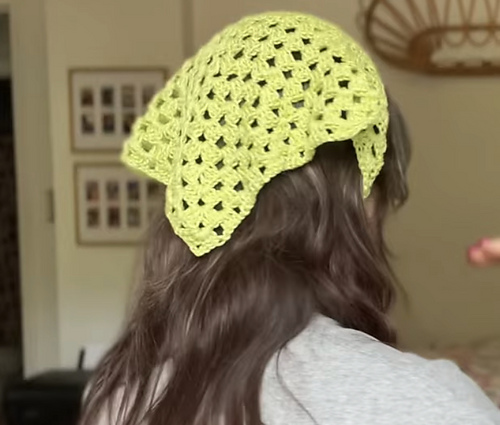
A drapey granny bandana is taught in a captioned video.
- Access
- Free video
- Yarn reference
- DK drapey yarn
- Designer level
- See source
Planning note. Check how the working yarn travels into the first tie so you can reserve the right amount and avoid an unnecessary join.
View the designer’s patternPlan your project before the first stitch
1. Choose deliberately
Read where the first tie begins. Some designs continue directly from the body into the edging and straps, while others describe a separate finish. Knowing that route in advance helps you reserve yarn and position the working end correctly.
2. Check the working details
Use the designer's measuring points. A continuous triangle can widen quickly, and the longest edge may be measured differently from a finished tie-to-tie span. Compare like with like before deciding that the body is large enough.
3. Finish with a plan
Make the first version in a controlled color plan. A single shade lets you focus on growth and edging. If you add stripes later, note the row at each change so the second side and the finishing remain intentional.
Once you have chosen a source, read its complete instructions and materials list. Check the terminology, the finished measurement and the point where the ties are included. Make your first version close enough to the original plan that you can understand what your own yarn changes. Keep any adjustment notes beside the project so that the result is repeatable.
Questions before you start
Does one piece mean there is no finishing?
No. Ends still need weaving in, and ties, edging or an optional fastening may need attention. The phrase here refers to the main bandana body.
Are the two VivCrochets options unrelated patterns?
They are related border choices built around a similar row-grown approach. One offers optional picots and the other a scalloped finish, so compare the edge you prefer.
Designer credits and access notes
The linked patterns belong to their credited designers. This is an original selection and planning guide; the complete stitch instructions, charts and download terms remain at the original sources. Listing availability, currency and included files should be checked on the creator’s page when you are ready to make or buy the pattern.
Leave a Reply