Top 5 Crochet Bandana Patterns for Practicing C2C, Puffs and Charts
· admin
Crochet Pattern Nest / Curated pattern guide
A small accessory can be a useful place to practice a technique before committing to a much larger project. These five bandana options introduce different learning tasks: corner-to-corner construction, a patterned color layout, puff-stitch texture or symbol-chart reading. They are not all beginner projects. Choose the technique you want to understand, then compare the level of support and the access format before deciding where to begin.
Compare the options
Access labels describe the route linked below. Free blog instructions and an optional paid PDF are different formats of a design, so alternate listings are not counted as extra patterns. The numbering is a reading order for this guide, rather than a claim about sales or popularity.
| Pattern | Access route | Construction |
|---|---|---|
| 1. C2C Bandana | Paid PDF | Corner-to-corner triangle |
| 2. Crochet Checkered Bandana | Free online | Corner-to-corner bandana |
| 3. Love Puff Bandana | Free download | Textured bandana |
| 4. Bandana/Shawl Chart #27 | Paid PDF | Scalable charted triangle |
| 5. Bandana/Shawl/Baktus #110 | Paid PDF | Scalable charted triangle |
The pattern shortlist
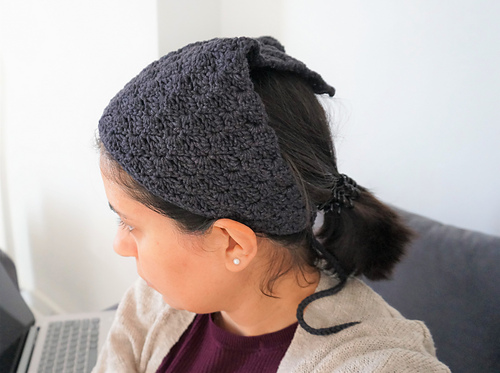
C2C Bandana
By Nadia BF · Ravelry
A bottom-up corner-to-corner triangle has straps and a linked tutorial.
- Access
- Paid PDF
- Yarn reference
- Cotton-Ease blend
- Designer level
- See source
Planning note. Practice the unfamiliar action on a small sample before adding the extra task of shaping a complete wearable accessory. Preview the relevant demonstration before that step.
View the designer’s patternCrochet Checkered Bandana
By Okey Dokeys · Ravelry / designer
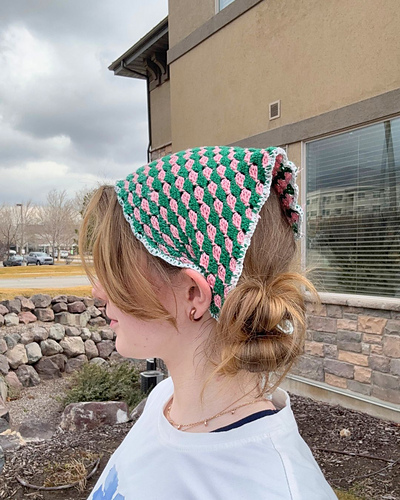
A checkered bandana uses corner-to-corner crochet.
- Access
- Free online
- Yarn reference
- Superfine cotton/acrylic blend
- Designer level
- Beginner
Planning note. Separate the stitch sequence from the color or shaping sequence in your notes, then combine them only when each part feels clear.
View the designer’s patternLove Puff Bandana
By Silent Bloom Crochet · Ravelry
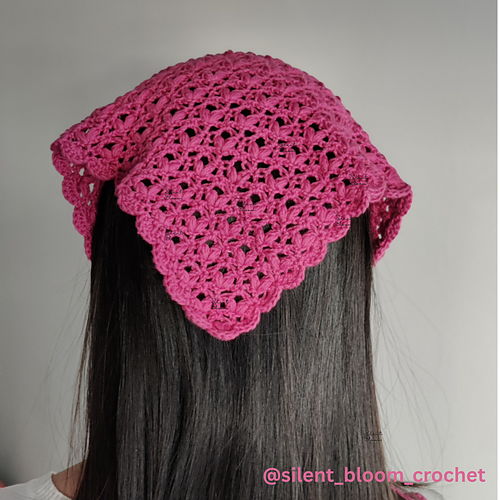
Puff-stitch texture has photo, chart and video support.
- Access
- Free download
- Yarn reference
- Cotton 8/4
- Designer level
- Intermediate
Planning note. Choose a yarn color that exposes the structure you want to study; a decorative effect is easier to assess when you can see the stitches. Preview the relevant demonstration before that step.
View the designer’s patternBandana/Shawl Chart #27
By SimplyCrochetCharts · LoveCrafts
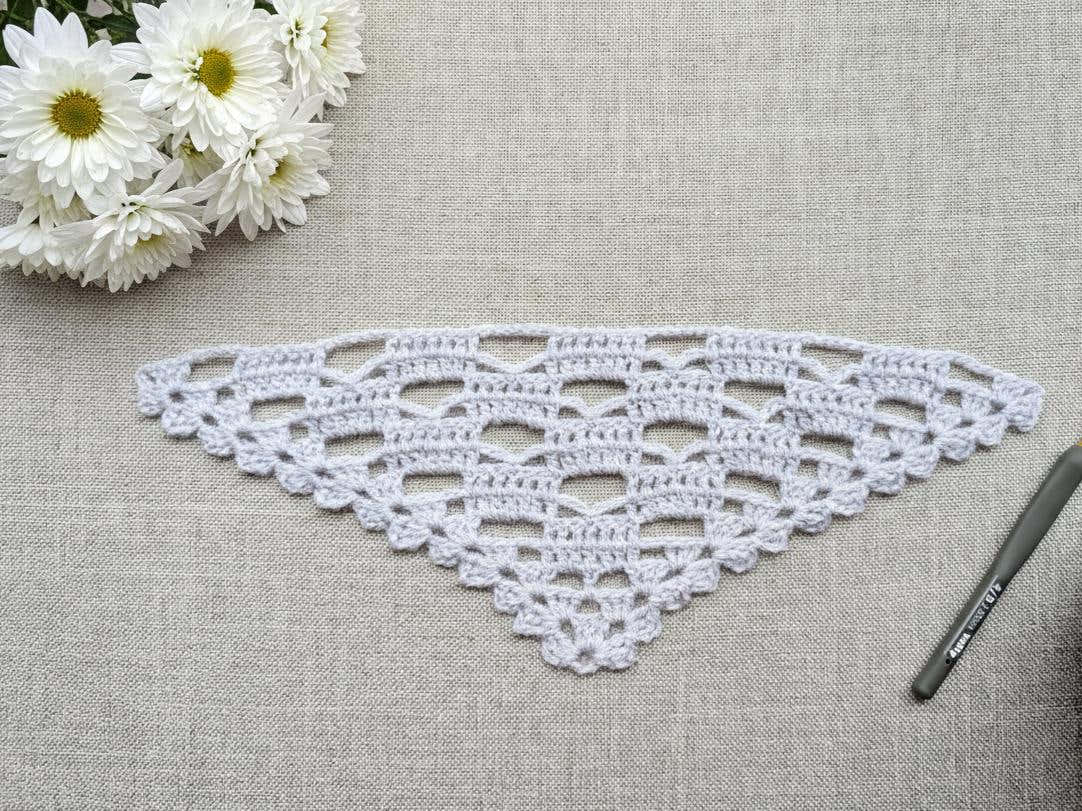
A symbol chart offers a scalable triangle bandana or shawl.
- Access
- Paid PDF
- Yarn reference
- See designer's supply list
- Designer level
- Beginner chart reader
Planning note. Read the key and the direction of the rows before beginning a chart, and mark the repeat you are currently following.
View the designer’s patternBandana/Shawl/Baktus #110
By SimplyCrochetCharts · LoveCrafts
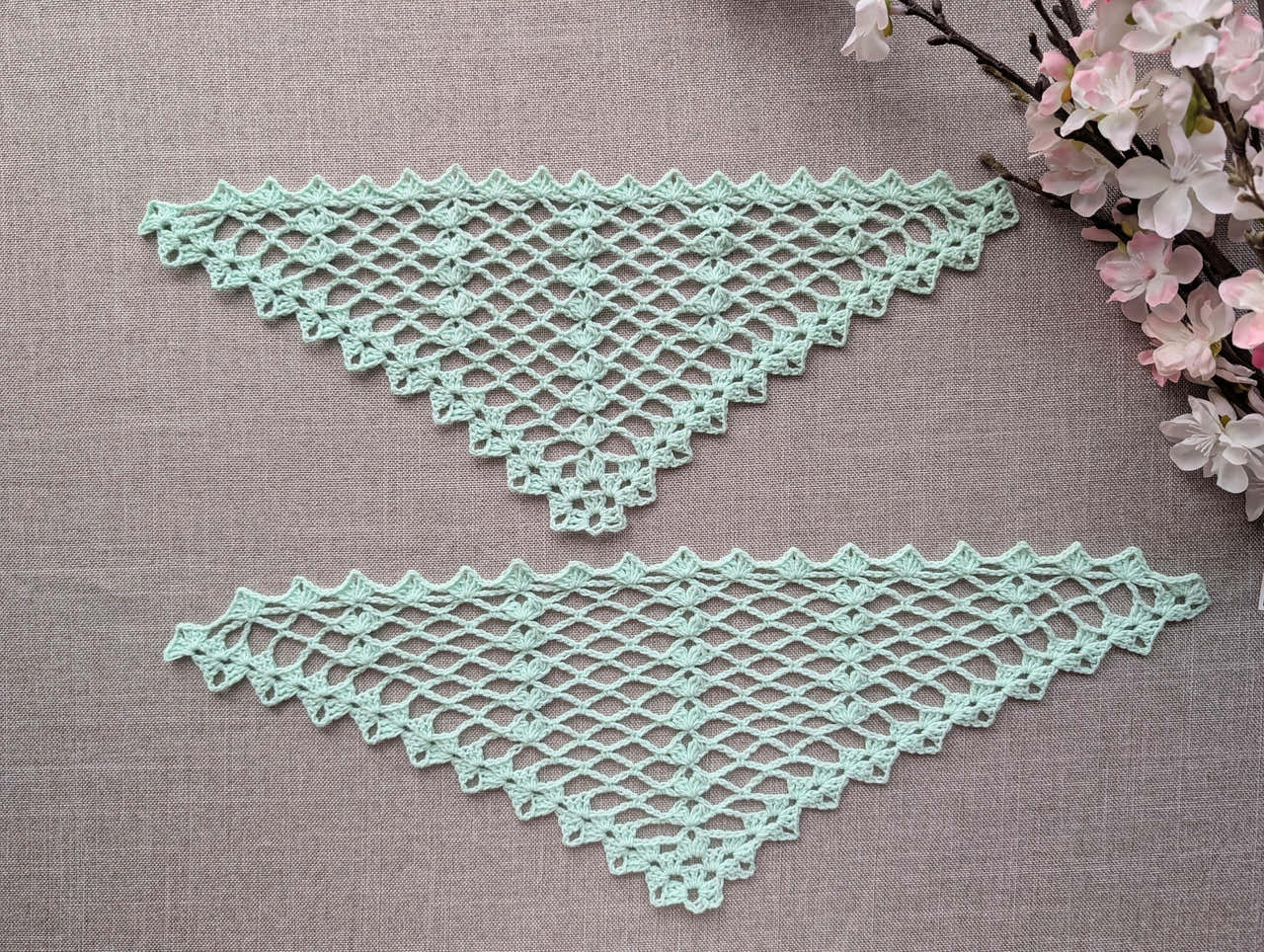
Written directions and charts offer classic and wider triangle shapes.
- Access
- Paid PDF
- Yarn reference
- See designer's supply list
- Designer level
- Intermediate
Planning note. Keep the first sample simple enough to diagnose a mistake. A clear learning result is more useful than a complicated first colorway.
View the designer’s patternPlan your project before the first stitch
1. Choose deliberately
Practice the unfamiliar action in isolation. A few C2C blocks, several puff stitches or one small chart repeat can reveal what you need to learn without the distraction of shaping a full accessory at the same time.
2. Check the working details
Separate stitch knowledge from construction knowledge. You may know every stitch in a pattern but still be learning how a triangle grows or how a chart shows a turning row. Mark those transitions in your project notes.
3. Finish with a plan
Keep the first sample simple. A clear yarn color and a consistent hook choice let you see the technique you are studying. Add an ambitious palette once you can recognize the structure without relying on the photograph.
Once you have chosen a source, read its complete instructions and materials list. Check the terminology, the finished measurement and the point where the ties are included. Make your first version close enough to the original plan that you can understand what your own yarn changes. Keep any adjustment notes beside the project so that the result is repeatable.
Questions before you start
Should a beginner start with the puff-stitch option?
The designer rates Love Puff as intermediate, with visual support. A confident beginner may enjoy learning from it, but a basic triangle can be a more comfortable first project.
What is the advantage of a crochet chart?
A chart can make repeated shapes and stitch placement easier to compare visually. Read the pattern's own key and direction notes rather than assuming every chart is arranged the same way.
Designer credits and access notes
The linked patterns belong to their credited designers. This is an original selection and planning guide; the complete stitch instructions, charts and download terms remain at the original sources. Listing availability, currency and included files should be checked on the creator’s page when you are ready to make or buy the pattern.
Leave a Reply