Structured Crochet Baskets in Three Nesting Sizes
· admin
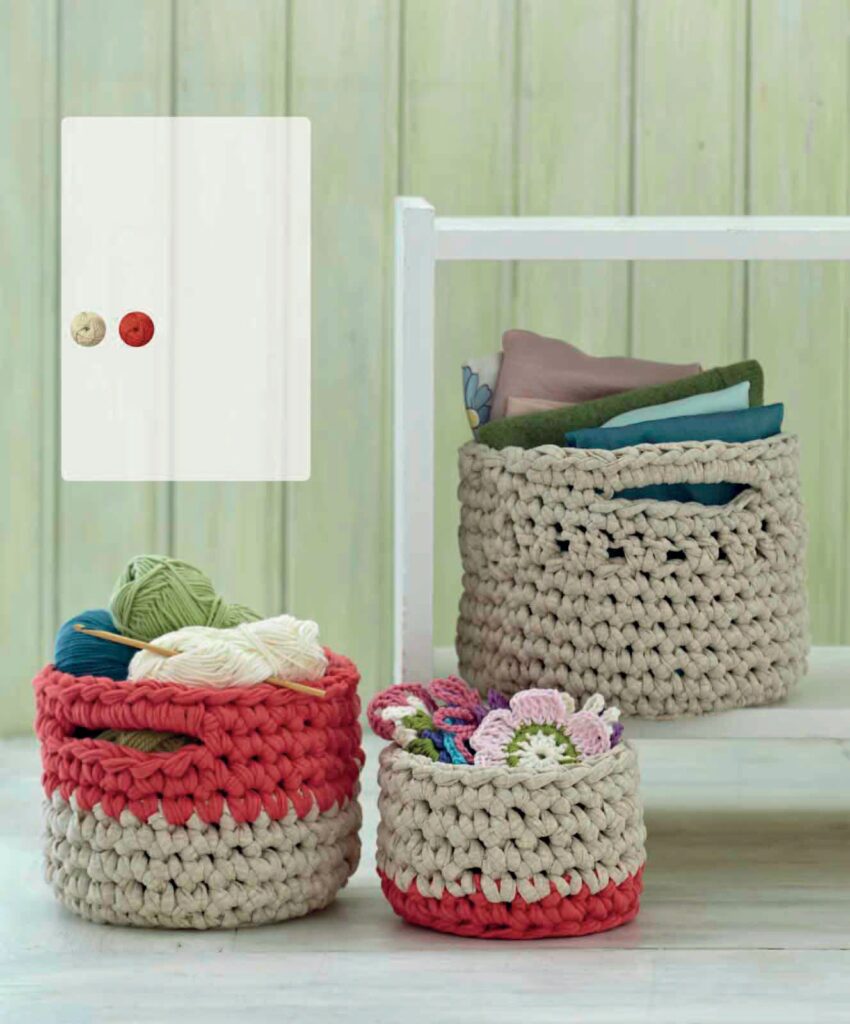
Structured crochet baskets use thick recycled yarn and close single crochet to make a set of three nesting containers. The small basket is open and plain, while the medium and large versions include chain-span handles. The largest also has a decorative grouped double-crochet round near its rim. The source uses a shared six-increase base system, then branches into three different wall heights and finishes.
Materials and approximate sizes
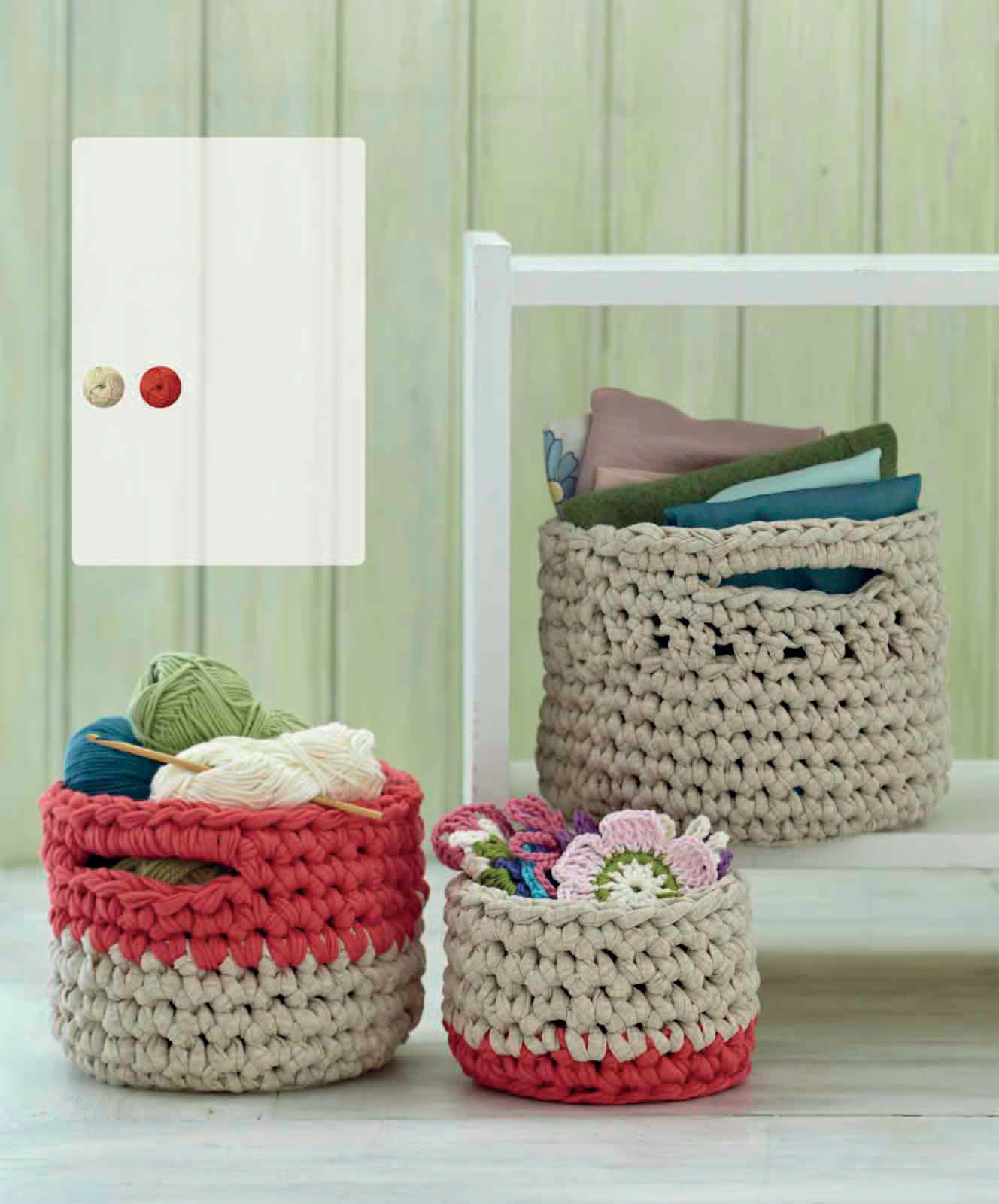
The original samples use Lion Brand Zpaghetti recycled yarn, listed at 50 m per 340 g, in Beige and Pinky Red. It allows other super-bulky yarns and even homemade jersey or T-shirt yarn. Use a 12 mm hook, a stitch marker and a large-eyed yarn needle.
The source sizes are approximately 20 × 17 cm for large, 15 × 15 cm for medium and 14 × 10 cm for small. The photographs show the containers nested together. Recycled yarn thickness can vary along a cone and between cones, so those dimensions are approximate; firm fabric and a stable base matter more than matching a single numerical gauge.
Shared base method
The chapter uses US sc for single crochet, dc for double crochet, ch for chain and ss for slip stitch. TBL means the back loop of the stitch. The opening six-sc ring is joined once. The following increase rounds are mostly worked in a marked spiral, with specific joins added where the pattern changes direction.
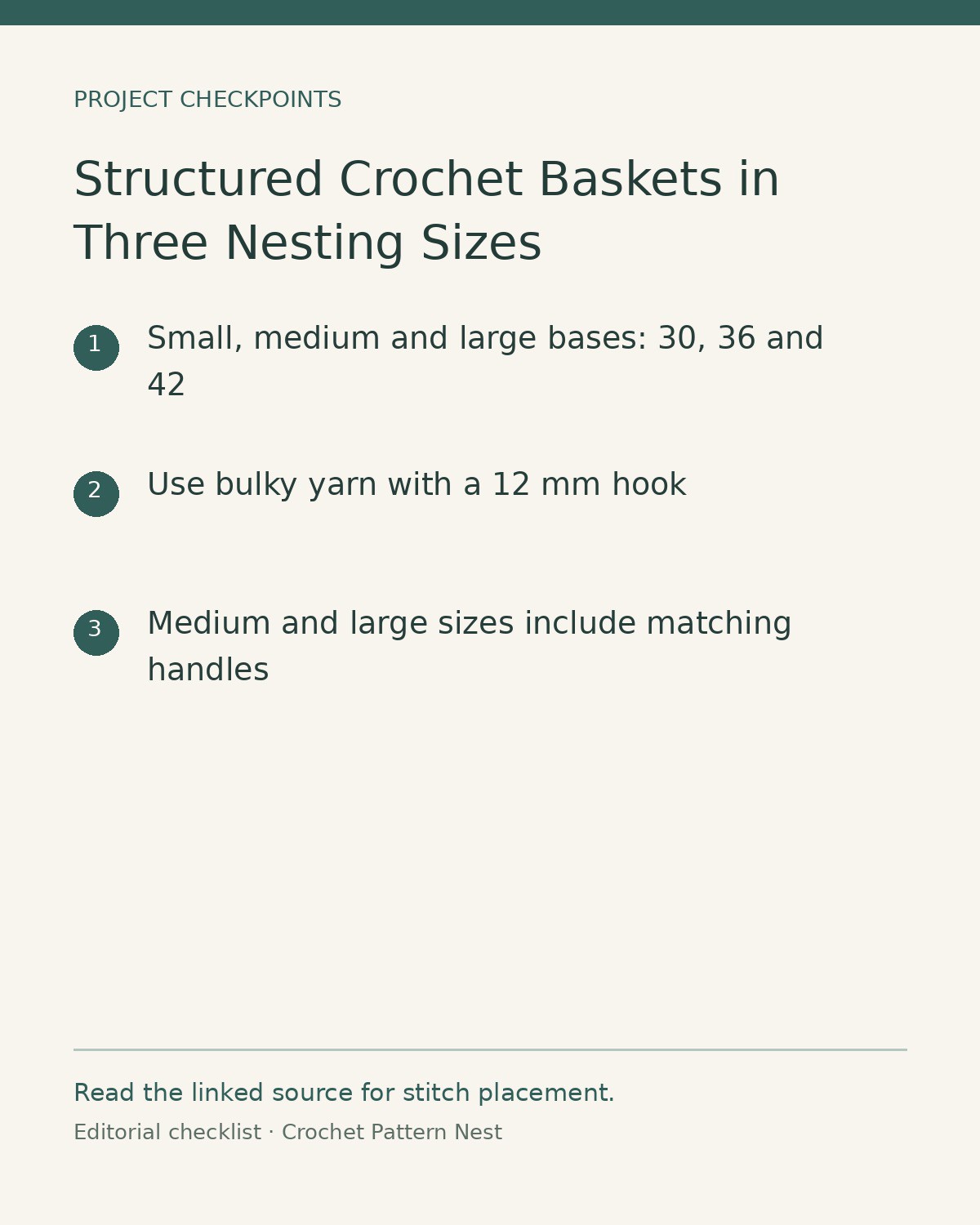
Beginning from six sc, add six increases on each base circuit. The successive totals are twelve, eighteen, twenty-four, thirty, thirty-six and forty-two. Stop at the required size instead of giving all three baskets the largest base.
Small basket: the simplest version
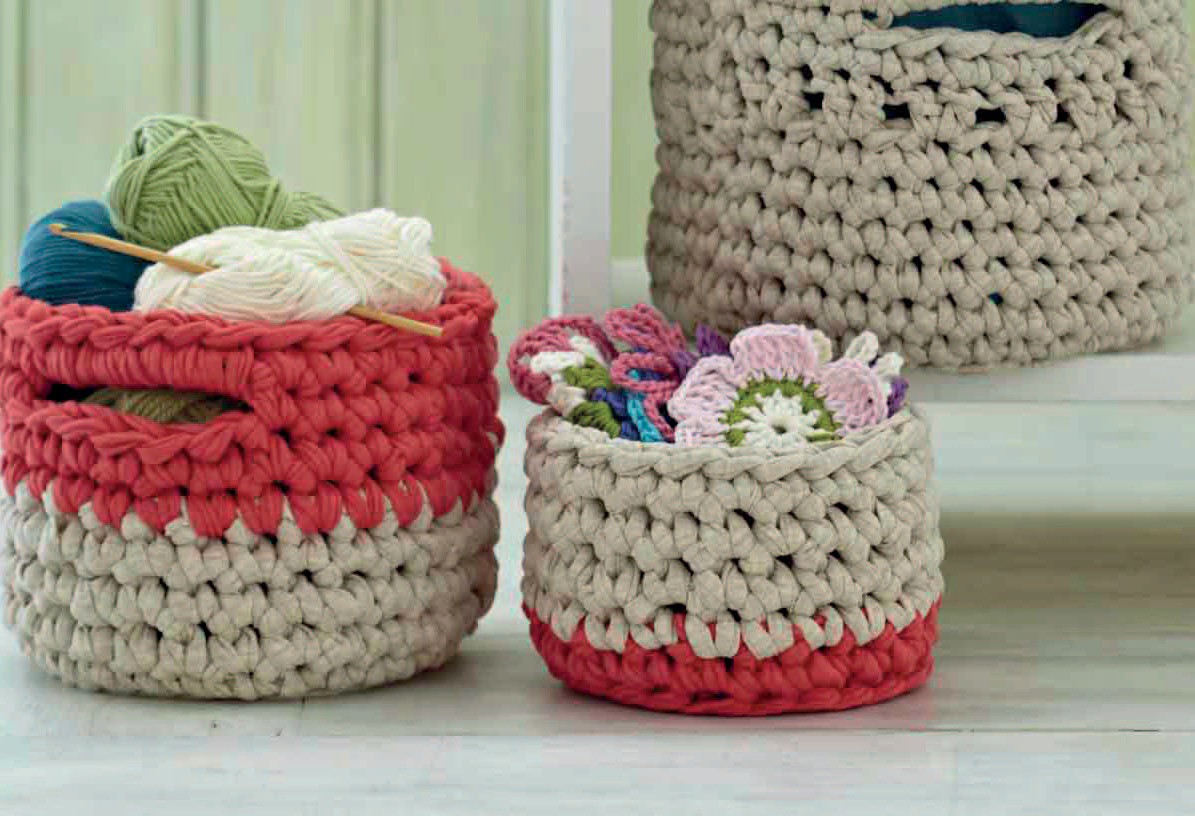
Stop the base at thirty stitches. Work the next round in back loops and join to establish the turn from bottom to wall. The source then changes from the small basket’s B color to A and works the plain sc wall.
Its first plain wall round is followed by four more repeats. Join and fasten off at the rim. The small version has no handle openings or decorative dc band, making it the quickest way to check the stiffness of your chosen recycled yarn.
Medium basket: contrast upper wall and handles
Stop the base at thirty-six stitches, then work the back-loop turning round. After the initial plain wall round, repeat it three more times in A and work two rounds in B. Keep the body count at thirty-six.
The handle round works six sc, ch 6 and skips six, works twelve sc, then makes the second chain-six opening and finishes the remaining six sc. On the next round, put six sc into each chain span, preserving the surrounding body stitches. Join and secure the end.
Large basket: a grouped band below the handles
Use a forty-two-stitch base. Work the joined back-loop turn and the plain wall rounds from the source. The decorative round uses two-dc groups separated by skipped stitches, with the starting chain counted as part of the first group. It retains the circuit’s overall width rather than adding a ruffle.
After the following plain sc round, make the handles with seven-stitch spans: seven sc, ch 7 and skip seven, fourteen sc, another matching span and the remaining seven sc. Fill each chain span with seven sc on the final round.
Finish for stable storage
Check every base flat before starting the walls. If the yarn becomes significantly thicker, adjust your grip or hook as needed to maintain a workable close fabric. Avoid tightening the rim so much that the larger baskets can no longer nest.
Weave the thick tails through several stitches on the inside, keeping the bottom surface smooth. Stand the baskets empty, then add light contents to assess the actual structure. A soft substitute yarn may need a different hook to obtain the firm appearance of the source samples; the stitch counts alone cannot guarantee rigid sides.
Frequently asked questions
What are the three base counts?
Thirty for small, thirty-six for medium and forty-two for large.
Are the rounds all joined?
No. Most are spirals, but the source explicitly joins the initial ring, turning rounds and selected finishing rounds.
Can I use recycled T-shirt yarn?
Yes. The source allows it, but yarn thickness varies, so adjust the hook and check the firmness of the fabric.
Original source and more crochet projects
Design credit: Structured baskets, Crochet Colors Theory, printed pages 164–165 / PDF pages 166–167. This article explains the supplied source and its construction; it does not claim an independently tested sample. The photographs are from that source, and the checklist is an editorial reading aid.
Open the original pattern in Drive. Source location: Printed pages 164-165; PDF pages 166-167. Keep the original instructions and diagrams beside you when working the project.
For another project, explore Anima Floris crochet coasters, or Strand Basket pattern.
Leave a Reply