5 Crochet Pencil Roll and Hook Organizer Patterns for Tidy Craft Supplies
· admin
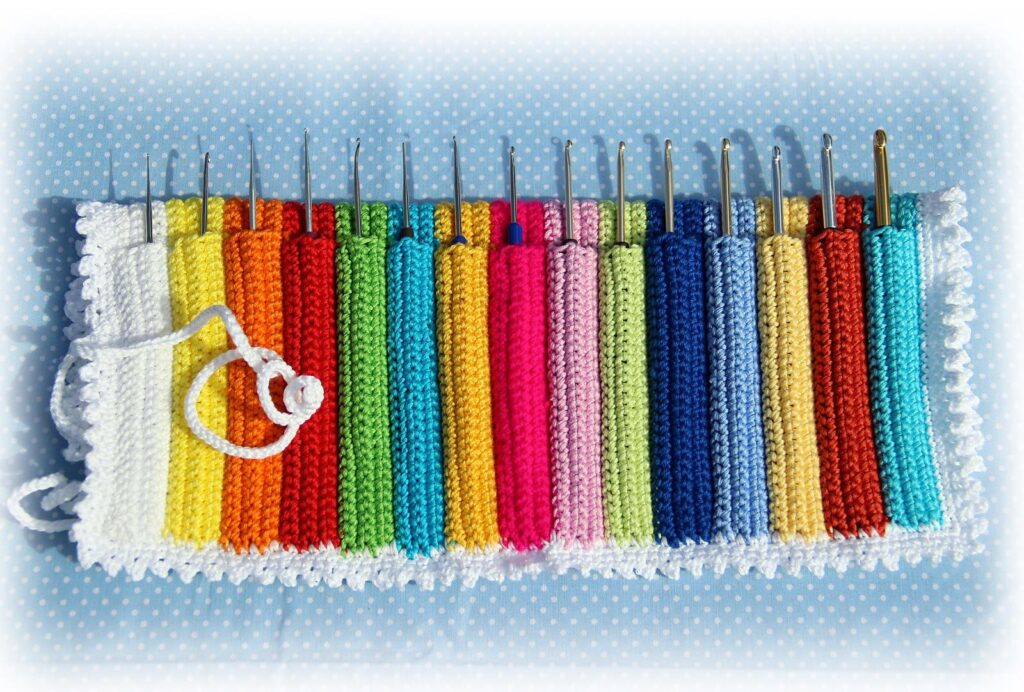
A roll-up case lets you see your tools in one place instead of searching through a deep pouch. It can separate colored pencils, keep crochet hooks in order and make a small craft kit easier to pack. The important choice is the compartment style: a pencil slot, an open pocket and a shaped hook holder do different jobs.
These five crochet organizer patterns include pencil rolls and dedicated hook cases. Some accommodate several kinds of tools; others are designed around crochet hooks. Check the length and thickness of your own supplies before choosing, especially if you use chunky ergonomic handles.
Pattern guide: These links lead to the credited designers’ instructions, not finished products. Paid PDFs and free options are marked separately. Check each source for its complete requirements and current availability.
Compare the five designs
| Pattern | Choose it for | Access |
|---|---|---|
| Organizer for Crochet Hooks and Pens | Adjustable compartments and a fold-over flap | Paid PDF · LoveCrafts |
| Star Stitch Pencil Roll | Decorative star texture and individual pencil spaces | Paid PDF · Ravelry |
| Roll-Up Pencil Case | A compact stationery kit | Free pattern · Yarnspirations |
| Crochet Hook Holder Roll | A dedicated roll for crochet hooks | Paid PDF · free website version linked |
| Ammonite Crochet Hook Roll | A decorative spiral and horizontal hook pockets | Free photo tutorial · video support |
1. Organizer for Crochet Hooks and Pens
Designer: Knitwork By Ina
Format: Paid PDF · LoveCrafts
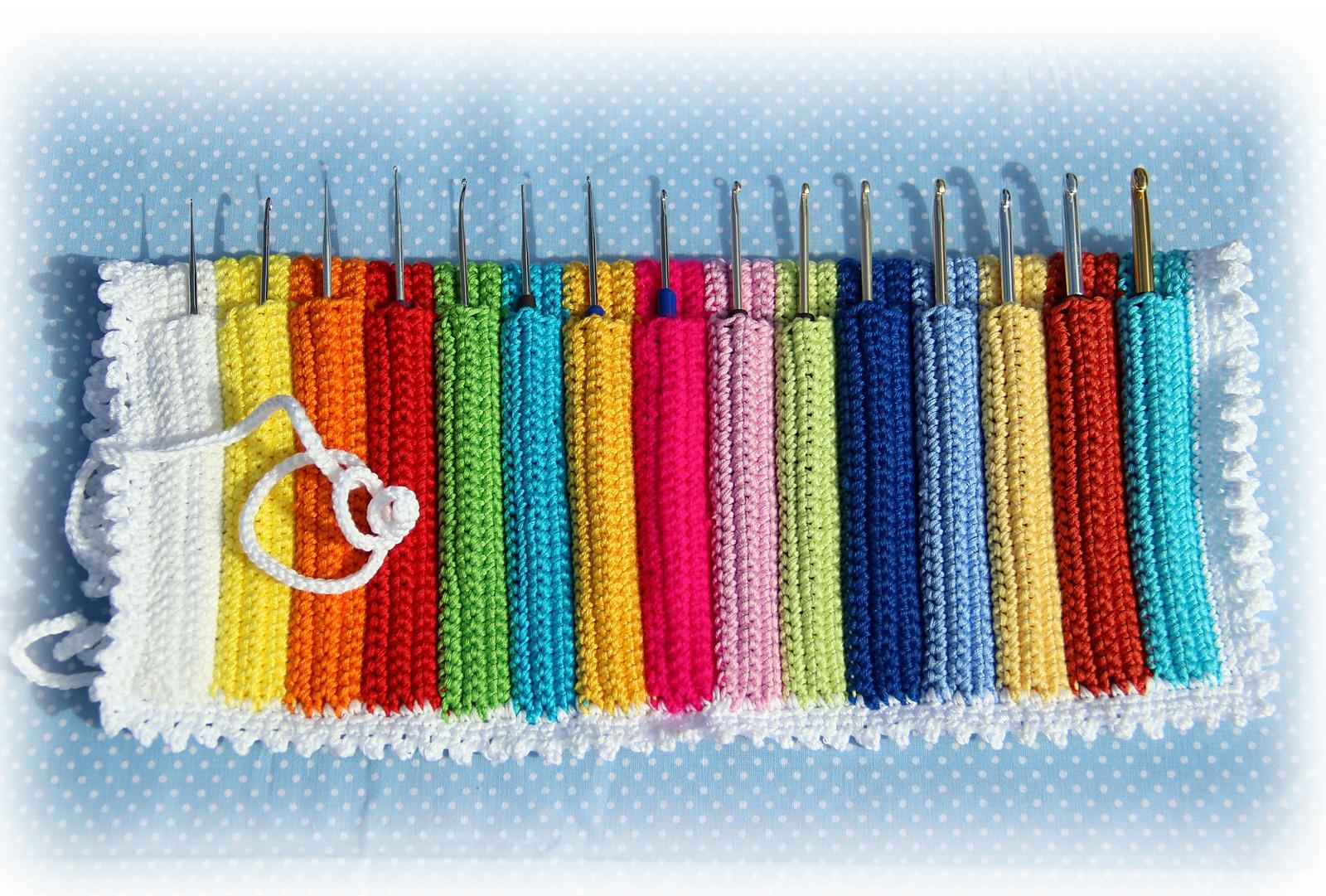
At a glance: Sport cotton; 3 mm hook; beginner
Ina’s organizer is the most flexible starting point here for a mixed collection of pencils, brushes and hooks. The designer explains that the length, width and number of compartments can be varied. The roll folds over the tools, rolls up and ties closed.
The eight-page English PDF uses chain, single crochet and slip stitch, and the listing rates it beginner-friendly. The colorful sample shows how useful small cotton leftovers can be. Lay out your tools in the order you want them before deciding how many compartments to make; that helps avoid a beautiful organizer with inconveniently sized spaces.
View Organizer for Crochet Hooks and Pens at the original source →
2. Star Stitch Pencil Roll
Designer: Alison Thompson
Format: Paid PDF · Ravelry
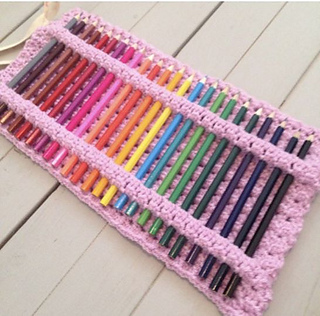
At a glance: US terms; adjustable number of spaces
This design uses star stitch as part of the organizing structure. The designer’s version holds 24 pencils, with scope to increase or reduce the number of spaces. The pink sample has a decorative look that feels closer to a handmade stationery accessory than a plain utility wrap.
Alison notes that a less bulky yarn can make the star openings tighter when the roll is used for crochet hooks. Tool diameter therefore matters when choosing materials. Test a small section with the thinnest item you want to carry before committing to the whole roll.
3. Roll-Up Pencil Case
Designer: Kim Kotary / Red Heart
Format: Free pattern · Yarnspirations
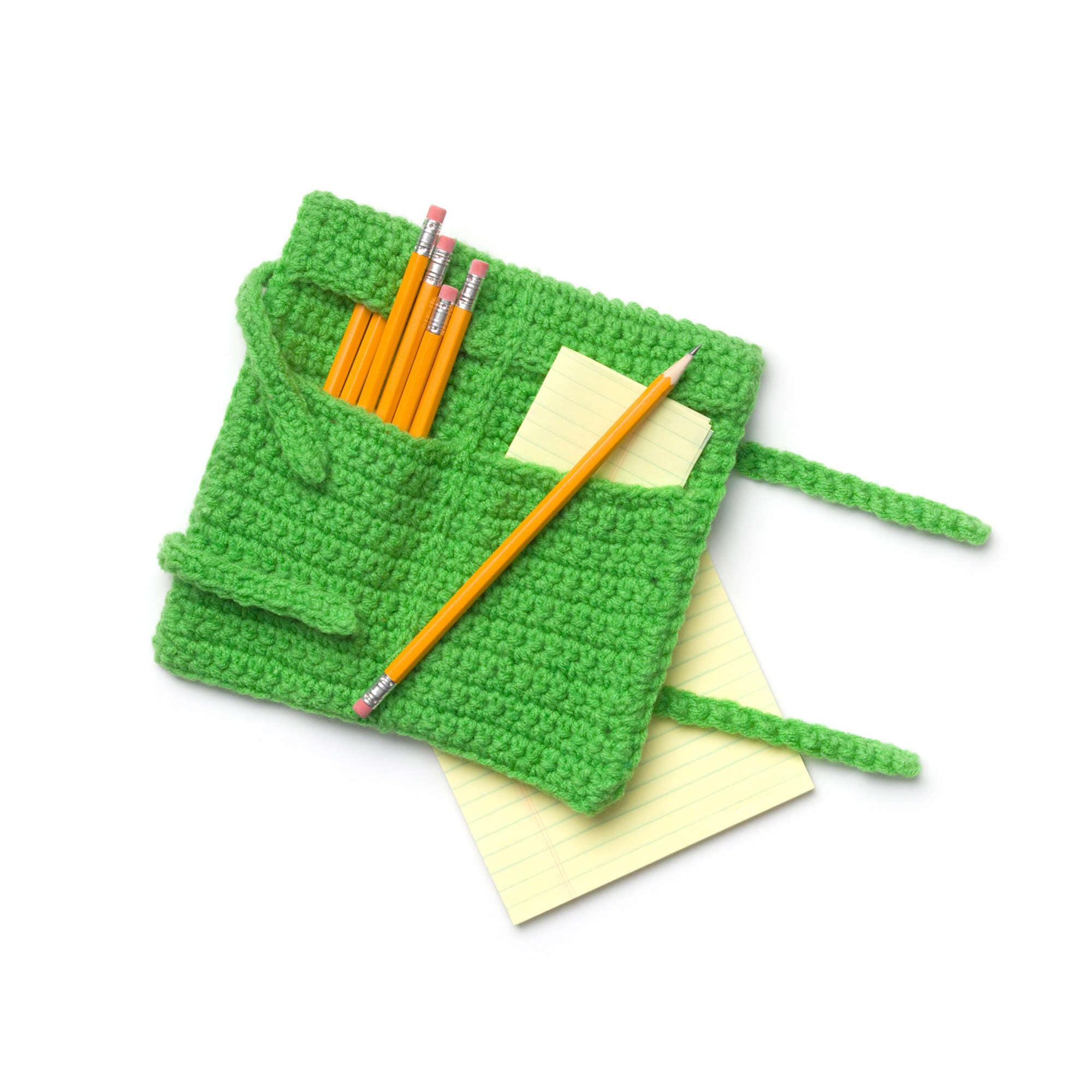
At a glance: Aran yarn; 4 mm hook; pocket construction
This Red Heart design combines a roll-up format with pockets for pens, pencils or crochet hooks. The listed finished case is approximately 7 by 9.5 inches, giving you a useful size reference before you begin. The pattern is available through Yarnspirations.
Choose this one if you want a small set together rather than a separate slot for every pencil in a large collection. The sample has a practical look, with room to see the tools when opened. Compare its depth with your longest pen or hook, and consider where an eraser or sharpener will go.
4. Crochet Hook Holder Roll
Designer: Nicole Riley / Nicki’s Homemade Crafts
Format: Paid PDF · free website version linked
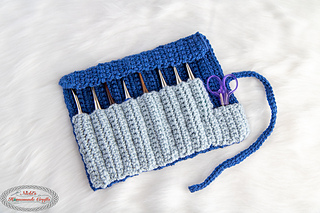
At a glance: Aran yarn; 4.5 mm hook; video support
Nicole Riley’s roll is designed specifically to carry hooks in a work-in-progress bag. The listed sample measures 10 by 7.5 inches and uses aran yarn. The Ravelry listing links to the free website version and video tutorial, while the printable PDF is sold separately.
Choose this if organizing hooks is your main aim and pencils are secondary. Compare your handles with the sample before adapting the slots. A row of hooks can look neatly arranged while still fitting too loosely for travel, so check the finished holder with the actual tools inside.
5. Ammonite Crochet Hook Roll
Designer: Dedri Uys / Look At What I Made
Format: Free photo tutorial · video support
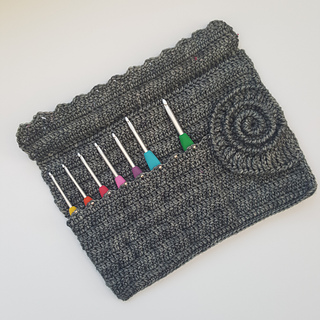
At a glance: DK yarn; 4 mm hook; about 24 × 16 cm
The Ammonite roll stands out for its spiral motif and horizontal pocket construction. Dedri Uys designed the sample around Clover Amour hooks, and the source includes a photo tutorial with a supporting video by Esther Dijkstra. The listed size is approximately 24 by 16 cm.
Pick this design when you want the organizer itself to be a special project. The spiral gives a focal point even in one color. Because the example fits a particular handle shape, do not assume that very long hooks or much larger handles will fit without checking the pattern and dimensions.
Measure the tools, not just the finished case
Sort your tools into long items, thick handles and small loose accessories. Measure the longest item with its cap on. Decide whether you need individual slots, shared pockets or a separate small pouch for stitch markers and erasers.
A fold-over flap can help keep the tops covered, while ties let you close a roll around different amounts of equipment. Test the closure with the organizer filled. A case that looks compact when empty may need more room once every compartment is occupied.
Frequently asked questions
Can every hook organizer hold pencils?
Not automatically. Check the pocket depth and opening size; hook-specific pockets may be too short or too shaped for your pencils.
Do I need a zipper?
These designs use roll-up construction. Follow the chosen pattern’s fastening instructions rather than adding an unnecessary zipper.
More crochet patterns to explore
Crochet pencil pouches with zippers · Animal crochet pencil cases
Pattern details come from the designers’ published listings. Follow the original instructions and gauge guidance for your chosen project. The full patterns remain with their creators.
Leave a Reply