Top 5 Fine-Yarn Crochet Bandana Patterns for a Delicate Finish
· admin
Crochet Pattern Nest / Curated pattern guide
A delicate-looking bandana often starts with the yarn choice, not with a complicated stitch. These five designs use or recommend fine, fingering or sport-weight yarn, with different routes through motifs, openwork and corner-to-corner fabric. Fine yarn is a different project scale from a bulky accessory: the stitches can be small even when the construction is familiar. Compare the instructions and the finished coverage before deciding which version to make.
Compare the options
Access labels describe the route linked below. Free blog instructions and an optional paid PDF are different formats of a design, so alternate listings are not counted as extra patterns. The numbering is a reading order for this guide, rather than a claim about sales or popularity.
| Pattern | Access route | Construction |
|---|---|---|
| 1. Patchwork Head Scarf | Free online; PDF optional | Joined granny motifs |
| 2. Easy Delicate Bandana | Free online; PDF optional | One-piece lace bandana |
| 3. Crochet Checkered Bandana | Free online | Corner-to-corner bandana |
| 4. Harper Bandana | Paid PDF | One-piece triangle |
| 5. Blue Meadow Bandana | Paid PDF | Joined granny motifs |
The pattern shortlist
Patchwork Head Scarf
By Carmen / Annie Design Crochet · Designer website
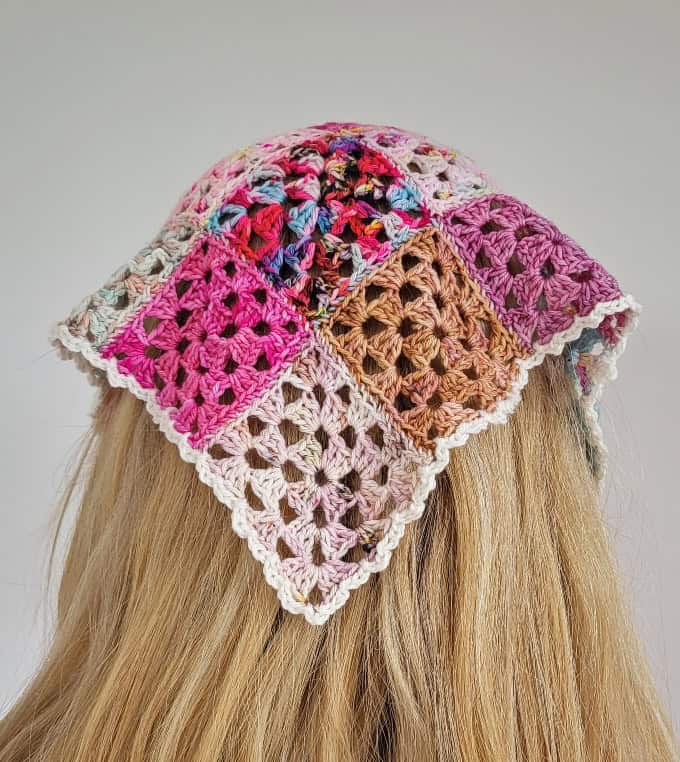
Fingering-weight granny motifs use leftovers and a contrasting border.
- Access
- Free online; PDF optional
- Yarn reference
- Fingering; several fiber options
- Designer level
- Basic granny-square skills
Planning note. Give yourself a clear view of the small stitches, and measure the growing triangle instead of relying only on its apparent size in your hands.
View the designer’s patternEasy Delicate Bandana
By Selina Veronique · Designer website
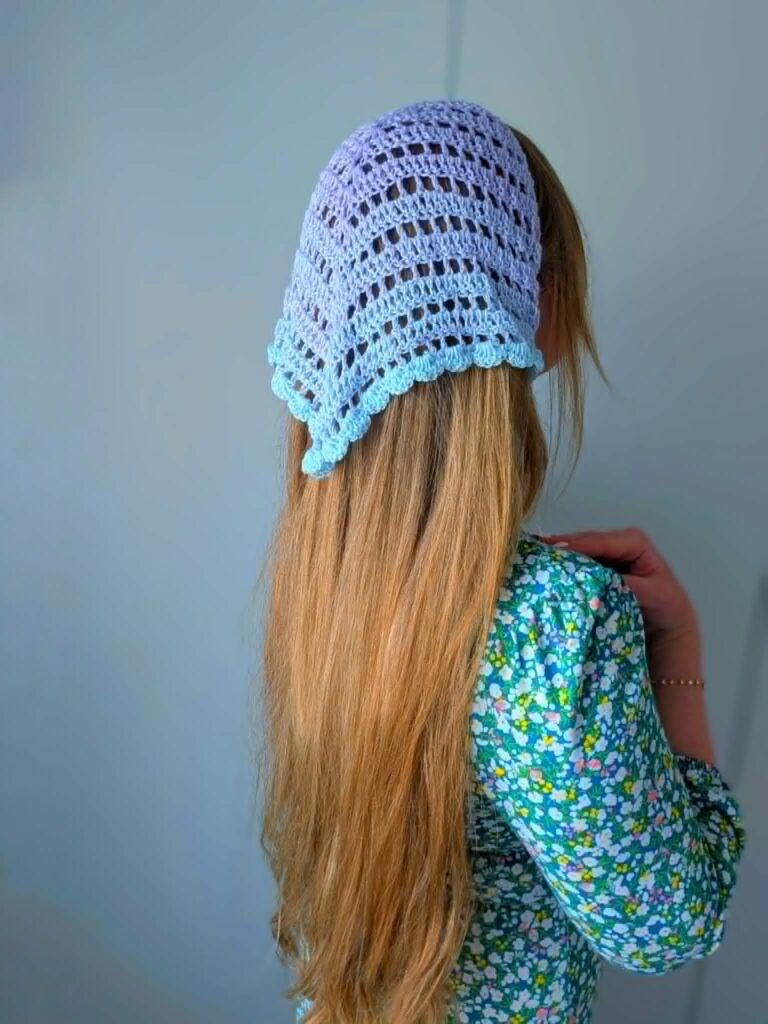
A delicate bandana in fingering bamboo-cotton yarn.
- Access
- Free online; PDF optional
- Yarn reference
- Fingering bamboo/cotton blend
- Designer level
- Easy / Beginner
Planning note. A neat finish becomes especially visible in a light fabric. Plan where the ends will be woven before adding a busy color sequence.
View the designer’s patternCrochet Checkered Bandana
By Okey Dokeys · Ravelry / designer
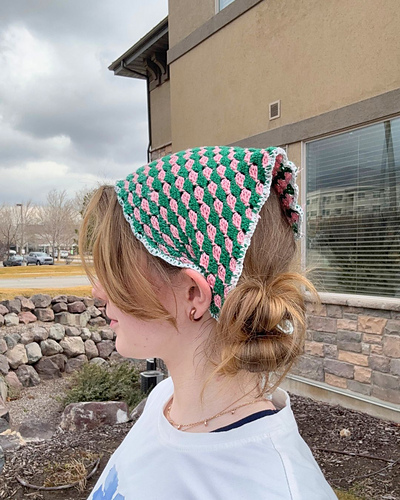
A checkered bandana uses corner-to-corner crochet.
- Access
- Free online
- Yarn reference
- Superfine cotton/acrylic blend
- Designer level
- Beginner
Planning note. Check the scale of a sample against the source measurements; a finer-looking yarn is not automatically an equivalent substitute.
View the designer’s patternHarper Bandana
By Stefanie Ghea / lankabyme · Ravelry
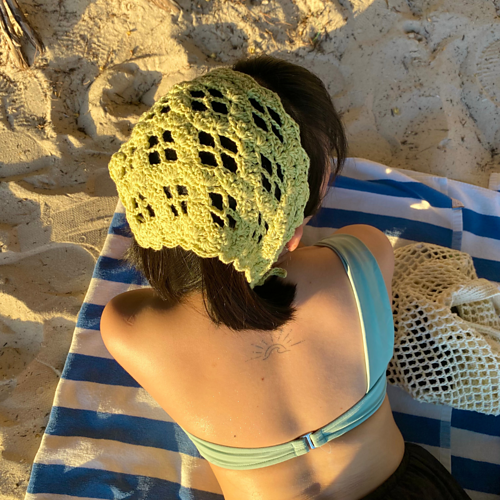
A seamless triangle includes sizing notes and a tester look book.
- Access
- Paid PDF
- Yarn reference
- Fine weight 1 or 2
- Designer level
- Advanced beginner
Planning note. Choose this as a deliberate small-stitch project and let the making pace follow the fabric rather than a promised completion time.
View the designer’s patternBlue Meadow Bandana
By Crochy Forest · LoveCrafts
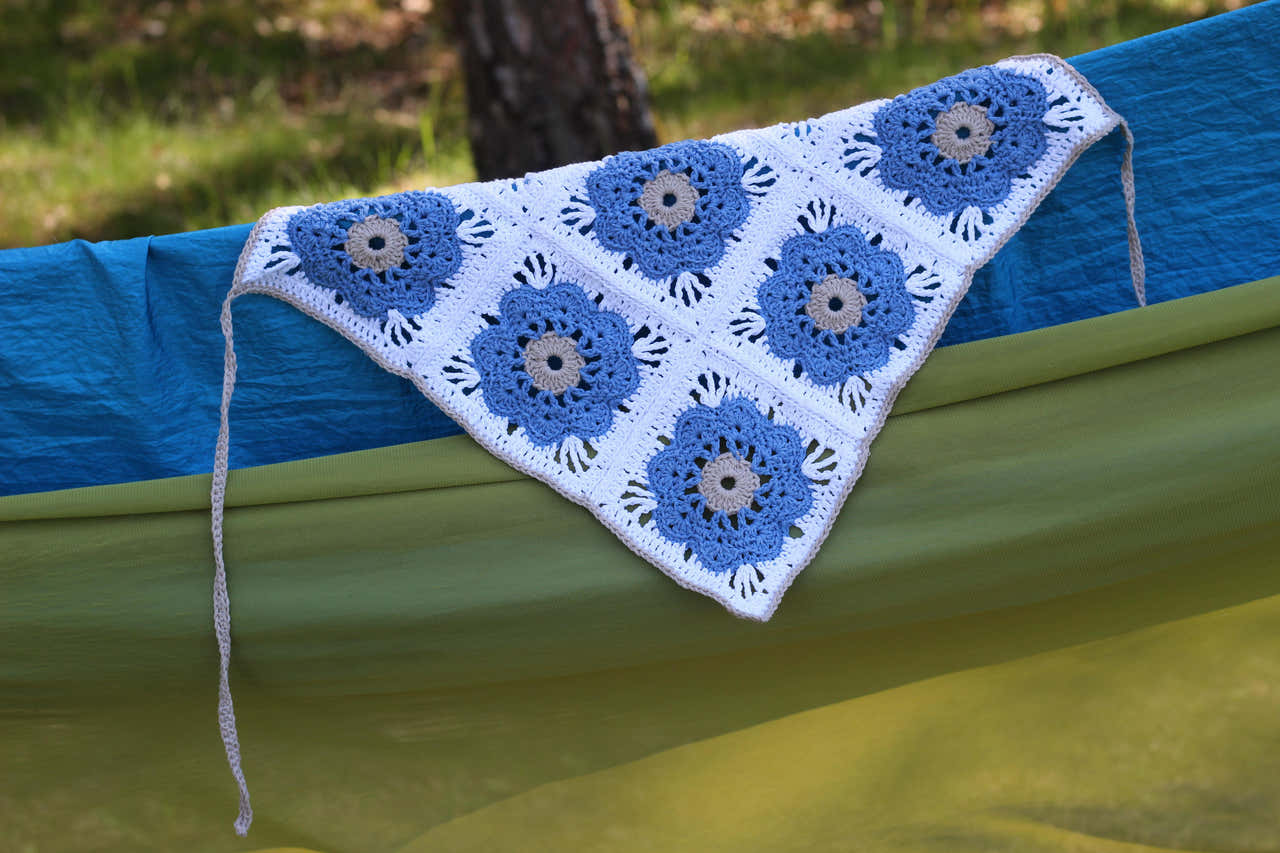
A granny-square triangle includes a photo tutorial and sizing notes.
- Access
- Paid PDF
- Yarn reference
- Fingering or sport cotton
- Designer level
- Easy / Adventurous beginner
Planning note. Keep the first colorway restrained so that you can judge the drape and the finishing without several competing visual details.
View the designer’s patternPlan your project before the first stitch
1. Choose deliberately
Choose visibility over novelty for your first fine-yarn project. A smooth, lighter color makes it easier to see the loops and the row ends. Once the construction is familiar, a more subtle shade can be a rewarding second version.
2. Check the working details
Keep measuring as the fabric grows. A small change in tension can accumulate over many stitches, so compare the triangle with the designer's finished measurements rather than relying only on the number of rows.
3. Finish with a plan
Treat the finishing as part of the design. Neatly woven ends, balanced ties and an even border matter in a lighter fabric. Make a sample join or tie if you are changing the recommended yarn or experimenting with a different finish.
Once you have chosen a source, read its complete instructions and materials list. Check the terminology, the finished measurement and the point where the ties are included. Make your first version close enough to the original plan that you can understand what your own yarn changes. Keep any adjustment notes beside the project so that the result is repeatable.
Questions before you start
Does fine yarn automatically make a pattern difficult?
No. Difficulty depends on the techniques and instructions as well as the yarn. Smaller stitches may take more concentration even when the stitch sequence is straightforward.
Can I make the same pattern with a thick yarn?
A heavier yarn changes scale and drape. Use the designer's resizing notes if available, or choose a pattern written for that weight instead of assuming the fine-yarn row counts will transfer.
Designer credits and access notes
The linked patterns belong to their credited designers. This is an original selection and planning guide; the complete stitch instructions, charts and download terms remain at the original sources. Listing availability, currency and included files should be checked on the creator’s page when you are ready to make or buy the pattern.
Leave a Reply