Carissa Crochet Baby Blanket in Suzette Stitch
· admin
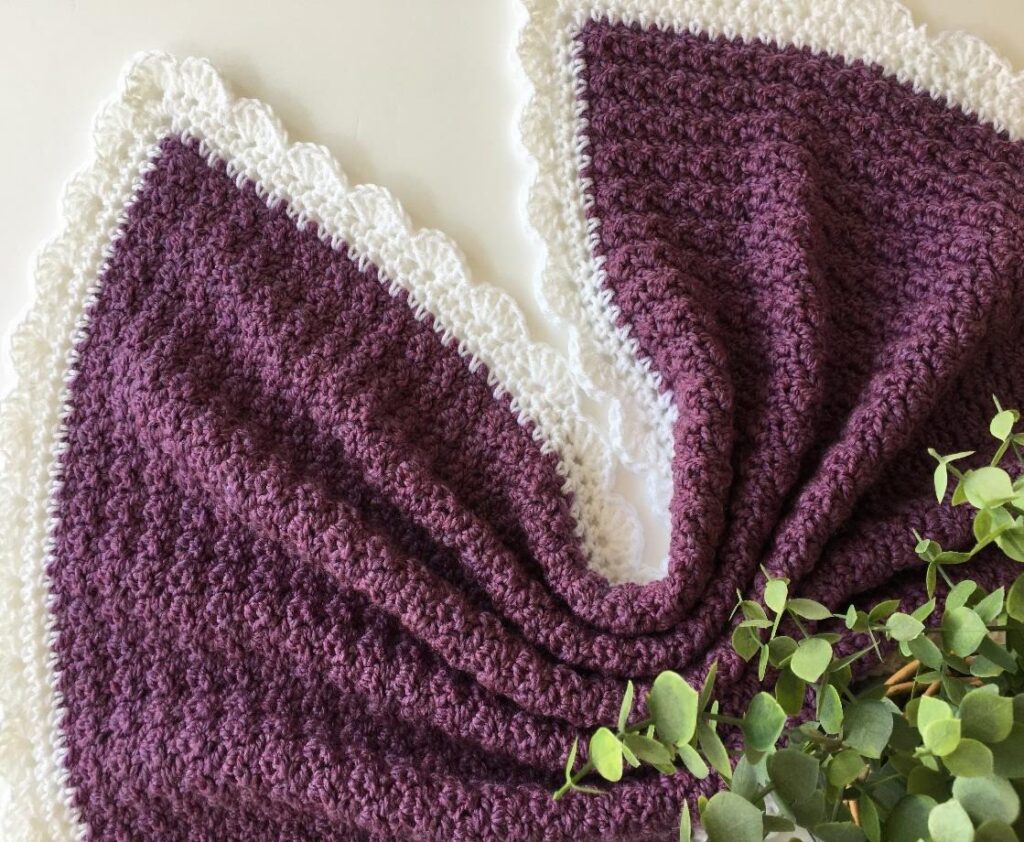
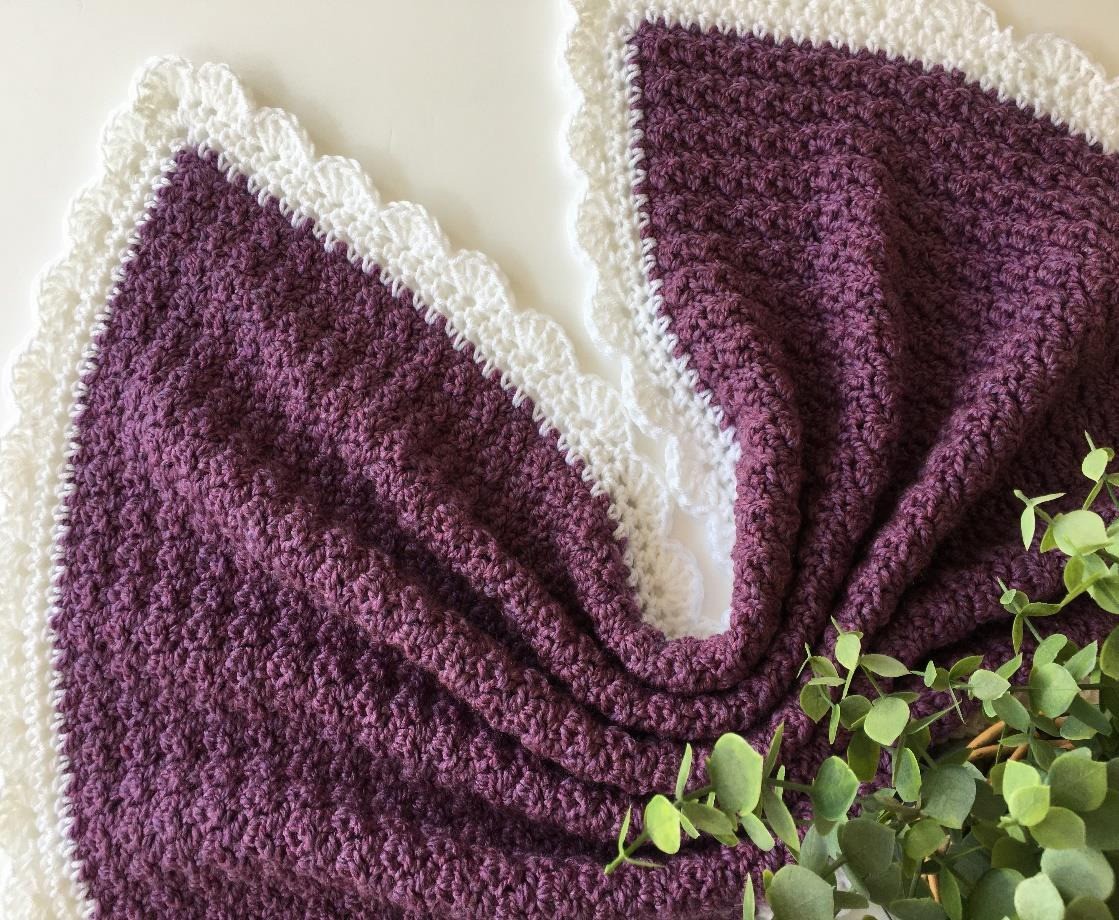
The Carissa crochet baby blanket uses Suzette stitch to make a textured fabric with a simple two-stitch repeat. A pale scalloped border frames the source’s plum center. The main blanket is worked in rows, then two half-double-crochet rounds prepare the edge for its final shell round.
Project details
| Skill level | Confident beginner |
|---|---|
| Size | Source approximately 26.5 × 37 inches including the border. |
| Hook | 8 mm |
| Source | The Carissa Blanket by Carrie Lawrance / Crafty Little Cottontail, June 2020. |
Materials and gauge
Chunky yarn: source 200 g / 304 m main color and 100 g / 136 m border color, 8 mm hook, needle and scissors. Sample yarns: King Cole Value Chunky in Plum and Paintbox Simply Chunky in Paper White.
Make a texture sample
Use US single and double crochet. A Suzette pair is sc and dc worked into the same stitch, with the next base stitch skipped. The source’s chain 1 at the start of its body rows counts as an edge stitch, which differs from its final border chain. Mark the row ends until that convention is familiar.
The source gives a sample gauge of ten dc and five rows per ten centimeters, while the main fabric uses a mixed stitch. Treat that as a source reference and measure your actual Suzette sample before relying on the stated blanket dimensions. Changing the chunky yarn or hook changes both size and yarn use.
Work the blanket body
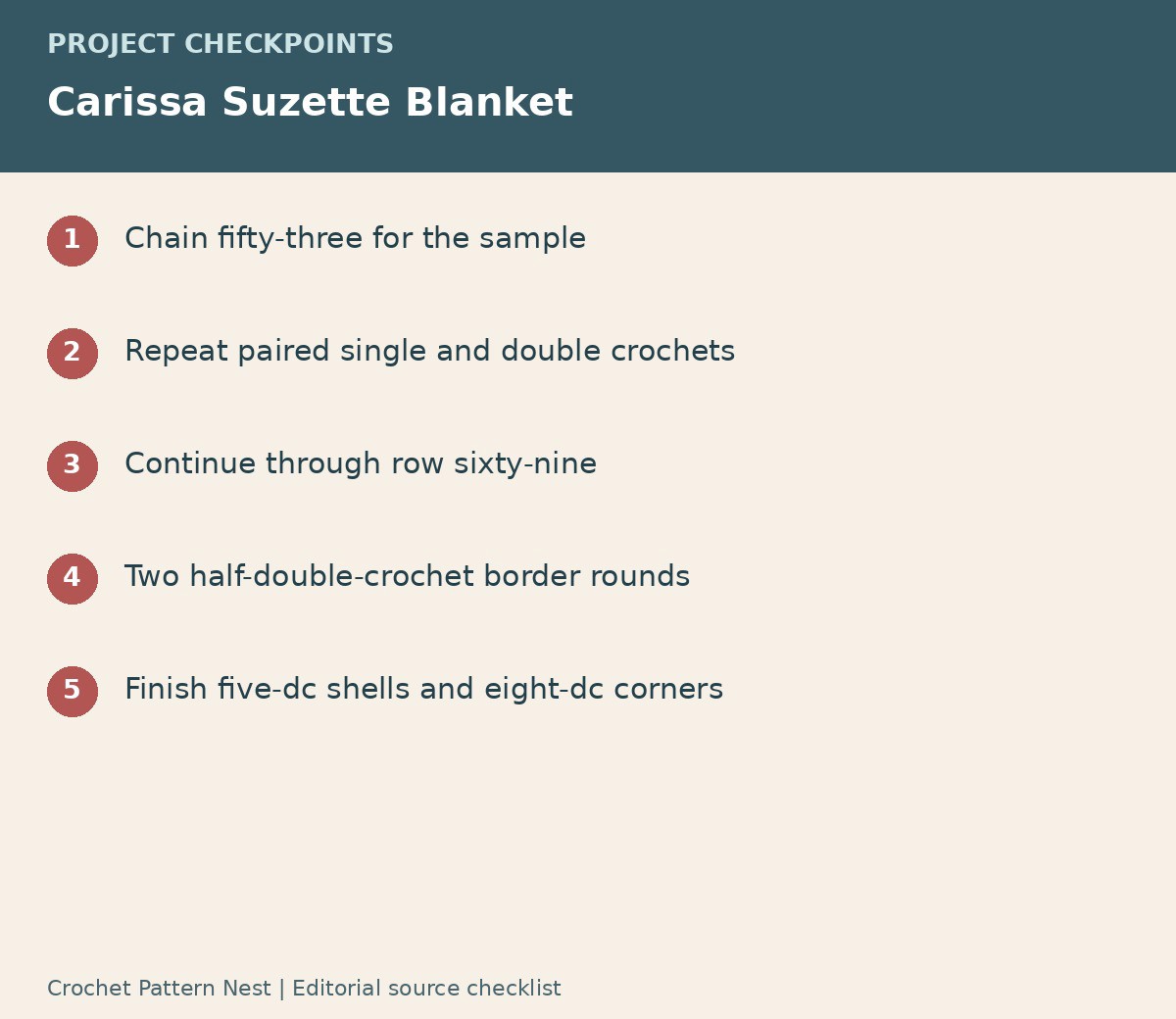
Chain 53 for the source sample. Into the second chain, work sc and dc, skip the next chain and repeat the paired stitches along the row. Finish with sc in the final chain, chain 1 and turn. Keep the first and last edge positions marked.
On the next row, skip the first stitch, work sc and dc into the next, skip one and continue the pair-and-skip rhythm. End with sc, chain 1 and turn. Repeat this row through row 69. The paired stitches sit into the low positions of the previous row, creating the rippled texture without a separate complicated stitch.
Build the hdc border foundation
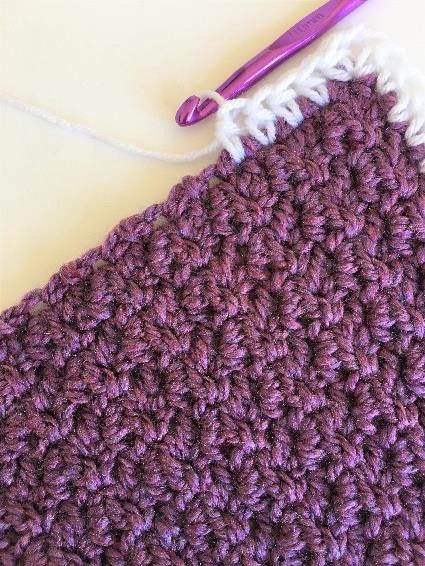
Join the border shade at the upper right corner with the right side facing. The first border corner is hdc, chain 2 and hdc, using the starting chain as specified in the source. Work hdc along the short edge and distribute them into the chain-one and sc row-end posts along the long edge. Repeat the corner arrangement around.
The source lists 246 hdc for the first border round and 256 for the second. Those totals depend on edge placement and are not a substitute for checking the repeat around your actual fabric. In the second round, work hdc along the sides and hdc, chain 2, hdc in each corner. Keep the edge flat before adding shells.
Finish with shells and larger corners
The final shell unit uses five dc in one stitch with a skipped stitch on either side and a sc anchor between shells. At the four chain-two corners, use eight dc. The source sample shows thirteen side shells along the short sides and seventeen along the long sides, between the larger corner groups.
Lay the blanket flat after each side. If the shell distribution does not reach the corner cleanly, first check the previous hdc edge placements rather than adding an unmarked extra shell. The original edge photographs show which row-end posts receive the long-side stitches.
Resize deliberately
The source gives a body-chain multiple of two plus one. Make a smaller sample with the same paired-stitch rhythm before changing the blanket width. A new body size also changes the hdc edging count and shell distribution; the original thirteen/seventeen side counts apply to its sample, not every resized rectangle.
Weave tails into their matching color, smooth the scallops and shape according to the yarn label. Keep the border relaxed enough to frame the textured center without cupping it or creating a frill.
Frequently asked questions
What is Suzette stitch here?
A single crochet and double crochet in the same stitch, followed by a skipped base stitch, repeated across the row.
How many body rows are used?
Sixty-nine in the source sample before the border.
Are the corner shells the same as side shells?
No. Side shells use five dc, while the source corner shells use eight dc.
Pattern and photograph credits
The Carissa Blanket by Carrie Lawrance / Crafty Little Cottontail, June 2020. Photographs show the supplied source projects. Crops, rotated photographs and editorial checklists are identified in their captions. Any stitch-count or terminology clarification is identified in the relevant section.
Open the original Carissa Blanket.pdf pattern reference in Drive — Whole PDF. Keep the original pages beside this guide for the detailed diagrams and any section specifically referenced above.
Leave a Reply